Privacy Policy

Tuesday, 28 February 2023

Will non-linear work days be the new hybrid working?


For a long time, the concept of work-life balance felt like an unattainable myth; all it took was a global pandemic and the ensuing government-enforced lockdowns to show employers that their staff could work remotely and still get the job done. In fact, studies show that remote employees work more hours overall than those based in an office for part or all of the week—remote workers put in an extra 8.7 hours per week on average compared to their office-based colleagues who average 6.5 extra hours. Post-pandemic a vast number of organisations have come around to the idea that flexible…

This story continues at The Next Web

Monday, 27 February 2023

What the Mesopotamians can teach us about Chat GPT and the impact of new tech


Adapting to technological advances is a defining part of 21st-century life. But it’s not unique to us: it’s been part of the human story since our earliest written records – even featuring in the plotlines of ancient myths and legends. While ChatGPT threatens to change writing (and writing-related work) as we know it, the Mesopotamians, who lived 4,000 years ago (in a geographical area centred in modern-day Iraq), went through this kind of seismic change before us. Their civilisation is credited with the invention of writing. The Mesopotamians are credited with the invention of writing. The city of Babylon, whose…

This story continues at The Next Web

Plan to build UK’s first battery gigafactory falls out of British hands


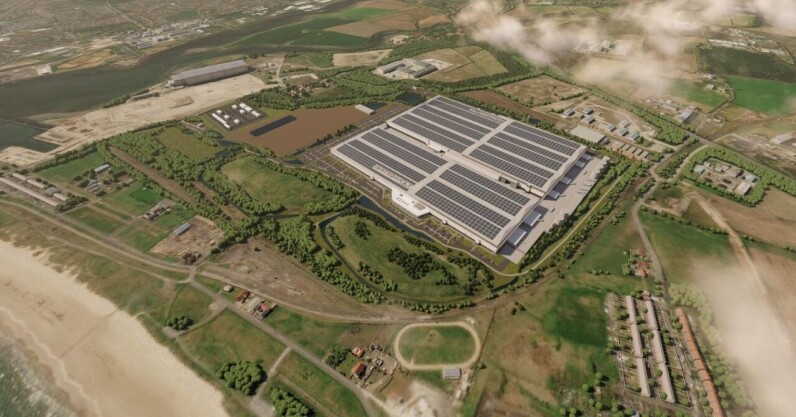
Britishvolt, a prominent UK battery startup, had generated enthusiasm over its plans to build the country’s first battery gigafactory. But after filing for administration in January, it has now been bought by Australian firm Recharge Industries. Launched in 2019, Britishvolt had planned a £3.8 billion battery plant near the Port of Blyth in Northumberland, promising 300,000 batteries per year, the creation of 3,000 direct jobs, as well as a significant boost to the region’s economy and the UK’s production of EV batteries. Despite gaining a funding pledge by the government and partnering with major companies like Aston Martin and Glencore, in…

This story continues at The Next Web

Saturday, 25 February 2023

Isolated Tangier Island: A Dialect Preserved from the 1700s

Tangier Island, located 12 miles off the coast of Virginia, has maintained its isolation to such an extent that its inhabitants still speak a dialect similar to the one used by the island’s original colonists in the 1700s. This distinct dialect features a significant example of the Big Vowel Shift, with the word “house” pronounced […]

from Crazy Facts https://ift.tt/YNIjFTw
via gqrds

Ukraine’s year of war exposes changing roles for cyber weapons


On the one-year anniversary of Russia’s invasion, Ukraine is commemorating horrific losses — and remarkable defiance. The country’s fierce resistance on the battlefield has been echoed on the digital front — where Kyiv has unique experience. The conflict with Russia has become the world’s first full-scale cyberwar, but Ukraine was a test bed for digital weapons long before the invasion of 24 February, 2022. Since Putin’s troops began flooding across the border, the cyber tactics have shifted dramatically. These developments have made Ukraine a bellwether for digital warfare. And to the surprise of analysts, cyber attacks have had a limited impact…

This story continues at The Next Web

Friday, 24 February 2023

European Space Agency unveils new plan for growing plants on the Moon


With the goal of establishing a long-term presence on the Moon, the European Space Agency (ESA) is working on a new project that will help determine the feasibility of growing plants on the lunar surface. Led by Norway’s Solsys Mining, the project will seek to develop a method for converting lunar soil into fertiliser for use in hydroponic farming. The study builds on previous research on lunar soil samples. While lunar soil, also known as regolith, is rich in most nutrients necessary for plant growth, it compacts in the presence of water, making it problematic for seeds to establish healthy…

This story continues at The Next Web

Are bioinspired drones the next big thing in unmanned flight?


A raft of research, supported by startup developments, suggests drones inspired by nature are the future of flight. Plans for the future of airborne transport include seeing a small army of drones competing for space in the sky with the 50 billion birds worldwide. But there’s also the potential of a halfway house, where drones that look like birds end up flying alongside the animals they’re inspired from and the traditional quadcopters. A new raft of drones inspired by nature, many of which are university spin-offs, are capturing the attention of investors. Animal Dynamics, which was launched in 2015 as…

This story continues at The Next Web

Henry Ford and his Model T

It is a historical fact that Henry Ford, the renowned industrialist and founder of Ford Motor Company, resisted making significant improvements to the Model T for a long time. However, it’s important to note that this decision was not entirely without reason. At the time, the Model T was a runaway success, and Ford had […]

from Crazy Facts https://ift.tt/Hdq7Mxg
via gqrds

Thursday, 23 February 2023

Can data-driven research show us how to be happy?


What is happiness? And how can we be happy? These questions are integral to the human experience, but their answers can be elusive. We can apply several perspectives to approach them, through philosophy or psychology, for instance. We can also use our personal view of our feelings and goals as we navigate through life. But can we bring a scientific approach to happiness? Meik Wiking, CEO of the Happiness Research Institute in Copenhagen, believes we can. The institute combines qualitative and quantitative methods to provide insights on well-being, happiness, and the quality of life. Its mission? To inform decision-makers in…

This story continues at The Next Web

There’s a small wedding chapel in the Maldives that has a glass aisle so the bride and groom walk on...

Click here for more...
from #Bangladesh #News aka Bangladesh News Now!!!

Wednesday, 22 February 2023

Predictive policing project shows even EU lawmakers can be targets


Predictive policing has exposed a new group of future criminals: MEPs. A new testing systems has spotlighted five EU politicians as “at risk” of committing future crimes. Luckily for them, it’s not a tool that’s used by law enforcement, but one designed to highlight the dangers of such systems. The project is the brainchild of Fair Trials, a criminal justice watchdog. The NGO is campaigning for a ban on predicting policing, which uses data analytics to forecast when and where crimes are likely to happen — and who may commit them. Proponents argue that the approach can be more accurate,…

This story continues at The Next Web

Low-Earth orbit: A launchpad for Europe’s spacetech startups


Big business opportunities are brewing in the cosmos. Morgan Stanley predicts the space economy will grow from €355 billion in 2020 to over €1 trillion by 2030 — and competition for the rewards is fierce. The USA remains a celestial superpower, while China is emerging as a powerful challenger. Europe has historically lagged behind the world leaders — but is now carving out a promising niche. Across the continent, countries are converging around a single segment of the market: small satellites in low-Earth orbit (LEO). The maximum altitude in LEO is about one-third of Earth’s radius. Credit: ESA As the…

This story continues at The Next Web

Why US-based unicorn HackerOne keeps their dev team in Groningen


In 2012, two former students from Hanze University of Applied Sciences in the Northern Dutch city of Groningen, took a major gamble. They made a list of 100 companies they’d like to work for — including Facebook, Twitter, Spotify, and Uber — and hacked them. As you can imagine, this little stunt certainly got their attention. Now, $159.4M in investment later, their cybersecurity company, HackerOne, reached unicorn status in 2022 and counts big players like Nintendo, AT&T, Hyatt, GM, and even the Pentagon amongst its clients. HackerOne is a bug bounty hunting platform that enables companies to enlist the help…

This story continues at The Next Web

Saturn’s 3 main rings are generally only about 10 meters (33 feet) thick. Source

Click here for more...
from #Bangladesh #News aka Bangladesh News Now!!!

Values of European unicorns plunge amid sharp fall in public markets


A rough year in public markets has taken a heavy toll on startups. According to new research, every unicorn in Europe that went public in 2021 has since shrunk in valuation. The losses follow record-highs for VC exit valuations in 2021. PitchBook, a financial data firm, attributed the downturn to a shrinking public market. The company found that 13 unicorns went public during 2021’s bull market and IPO frenzy. Yet none have gone on to have positive share price returns. Their numbers paint a gloomy picture. By the end of 2022, more than half of them had lost over 75% of their…

This story continues at The Next Web

Tuesday, 21 February 2023

Traditional nativity scenes in Catalonia sometimes include a figure of a guy pooping. He’s called...

Click here for more...
from #Bangladesh #News aka Bangladesh News Now!!!

Studies show women are less likely to apply for jobs at male-dominated startups


Mark Zuckerberg, Larry Page, Sergey Brin, Jeff Bezos: what these names have in common is they are all founders of some of tech’s most powerful companies. The other key thing they have in common is they’re all men. While there are many women founders—Melanie Perkins of Canva and Sandy Lerner of Cisco are just two, along with Mira Murati, the CTO of OpenAI, creator of the much-lauded ChatGPT—there is a significant gender disparity in the technology industry. There are many systemic reasons for this. Globally, women make up over 50% of the population, but own only 1% of the total…

This story continues at The Next Web

River Monsters

The Animal Planet TV show “River Monsters” came to an end as all major species of freshwater fish were captured by its host, Jeremy Wade. Consequently, the show exhausted its content.

from Crazy Facts https://ift.tt/XRhe9Hk
via gqrds
Photographer Jodee Ball’s 6 tips for perfect portraits are:- an S-shaped pose- a ¼ turn away from...

Click here for more...
from #Bangladesh #News aka Bangladesh News Now!!!

Monday, 20 February 2023

The scientists who first discovered the platypus thought it was fake. Although indigenous Aboriginal...

Click here for more...
from #Bangladesh #News aka Bangladesh News Now!!!

UK at risk of lagging behind EU and US in clean energy investment race


Although the UK has set out ambitious clean energy targets, it risks lagging behind the US and the EU in attracting the required investments, two of the country’s energy trade organisations have warned. Ahead of the Chancellor’s Spring Budget next month, Energy UK and Renewable UK have published two separate reports, calling on the government to implement measures and rule changes that will enable the UK to attract vital private investment in renewables. “The renewable energy sector is facing a perfect storm this year. According to Energy UK’s report, investment in low-carbon electricity generation “has deteriorated significantly” in the past…

This story continues at The Next Web

Sunday, 19 February 2023

Sandwich, England

John Montagu, from the town of Sandwich, England, is credited with inventing the sandwich. Montagu’s gambling obsession left him little time for seated meals, leading him to request his valet to bring him a piece of meat placed between two slices of bread, which eventually became known as a sandwich.

from Crazy Facts https://ift.tt/N1yPaZE
via gqrds
You can’t usually smell your own house (or perfume) because of a survival instinct called ‘olfactory...

Click here for more...
from #Bangladesh #News aka Bangladesh News Now!!!

the pilot episode of LOST

At the time of its production, the pilot episode of LOST held the record for being the most expensive pilot episode in television history. However, the network president who approved the pilot faced consequences and was terminated from their position due to the high cost of the episode.

from Crazy Facts https://ift.tt/6m7LxUZ
via gqrds

How to build a great software engineering team


This article was originally published on .cult by Chameera Dulanga. .cult is a Berlin-based community platform for developers. We write about all things career-related, make original documentaries, and share heaps of other untold developer stories from around the world. Software development is teamwork and having a good team structure is vital for its success. But, even a tiny misalignment could adversely affect our teams’ output. That’s why we should be extra careful when putting a team together. In this article, I’ll discuss some important factors you need to consider when building a software engineering team for your company. Why is team…

This story continues at The Next Web

Acclaim

The video game maker “Acclaim” was named by its founders in such a way that it would appear before their former employer “Activision” and “Accolade,” another company established by ex-Activision employees, in alphabetical listings, following the same logic as that behind the establishment of Activision itself by ex-Atari employees.

from Crazy Facts https://ift.tt/3ecSMnu
via gqrds
Napoleon loved chicken dinners. He insisted on having chicken at all hours of the day, even as his...

Click here for more...
from #Bangladesh #News aka Bangladesh News Now!!!

Friday, 17 February 2023

EU gets closer to blockbuster investment into domestic semiconductor chip production


According to EU data, numerous vital tech sectors in the bloc have been suffering from supply shortages in semiconductor chips, mainly as a result of the European dependency on imports from a limited number of companies and countries. To address this issue, the union aims to boost its domestic industry by implementing new legislation. On Wednesday, the European Parliament adopted its position on two proposed draft bills: the Chips Act and the Chips Joint Undertaking. On the Chips Act, MEPs endorsed the text put forward by the Industry Committee and expressed their support of its three main measures: Reinforcing technological…

This story continues at The Next Web

These are the next 6 industries that are ripe for tech disruption


When it comes to investing in innovation, certain industries have flourished over others. Those that haven’t are now facing a do or die situation to keep up with the demands of a modern society, the ever-prominent concern around the climate crisis, inflation issues, and an aging population. Looking at the global stats Tracxn collected from 230+ sectors between 2013 and 2023, it’s clear which industries — education, hospitality, agriculture, industrial manufacturing, real estate and construction, and commercial airline — have fallen behind, received less funding and seen less successful startups being founded. Whether it’s been down to high costs, difficulty…

This story continues at The Next Web

7 key takeaways about the Dutch tech startup ecosystem you need to know


The Dutch tech startup ecosystem has been steadily flourishing over the past five years, establishing itself as one of Europe’s most vibrant hubs. Yet, there are still hurdles the Netherlands needs to overcome in order to reach its full potential and successfully compete on a global scale. That’s according to the annual State of Dutch Tech report by TechLeap, a non-profit organisation which helps quantify and accelerate the ecosystem in the Netherlands. Here are seven key takeaways from the report you need to know about: The Netherlands houses the EU’s most successful ecosystem In 2022, the Amsterdam-Delta region was the…

This story continues at The Next Web

Wednesday, 15 February 2023

EU launches €3.75 billion fund of funds to help tech startups scale up


Five EU member states and the European Investment Bank (EIB) Group have launched a new fund to support the late-stage growth of promising European tech startups and increase the continent’s competitiveness in innovation. The so-called European Tech Champions Initiative (ETCI) aims to address the issue with inadequate late-stage funding, especially for companies seeking more than €50 million in capital. Boosting European investment “Europe’s tech startups often do not have sufficient capital to compete on a global scale and are pushed to relocate overseas. Closing this scale-up gap could create a large number of highly skilled jobs and boost growth,” the…

This story continues at The Next Web

The first public toilet

George Jennings created the public toilet which was first unveiled at the Great Exhibition in 1851. It was available for use at the cost of one penny, and this led to the popularization of the phrase “To spend a penny” as a euphemism for using the toilet in the United Kingdom. During the exhibition, the […]

from Crazy Facts https://ift.tt/eyVIsMT
via gqrds

Tuesday, 14 February 2023

Scientific breakthrough could take us closer to impactful quantum computers


In a world first, scientists from the University of Sussex and Universal Quantum, a spin-off of the university, have demonstrated that quantum bits (qubits) can directly transfer between quantum computer microchips. This breakthrough is expected to overcome a major obstacle in building quantum computers that are large and powerful enough to address the crucial societal challenges they’re envisioned to: from medicine development, to the creation of new materials and climate change solutions. To address these issues, experts estimate that millions of qubits are required — a number currently out of reach, with existing quantum computers operating on the 100-qubit scale.…

This story continues at The Next Web

Can ChatGPT write you the ultimate cover letter?


Cover letters are something many job candidates really struggle with. Lots of people aren’t even convinced they’re necessary. With so many job applications happening these days via websites and apps –– surely that online form you filled out is all that’s needed? A recent survey from Cultivated Culture found that, while 53% of employers prefer candidates who add cover letters with their CVs, only 10% of hiring managers actually take time to read them, which further adds to job applicants’ frustration. And if you’re job hunting and want to send out as many applications as possible, does writing an individualized…

This story continues at The Next Web

Monday, 13 February 2023

EU awards €50K to three pioneers in social innovation


The EU has announced the three winners of the European Social Innovation Competition (EUSIC), which seeks to find pioneering solutions to societal challenges. The 2022 challenge, named “the future of living,” was designed to attract participants who can advance the affordability, sustainability, and re-invention of European housing districts. “Social innovation is crucial to increase resilience and support the transformation of our economies, while putting people first,” Hubert Gambs, the Commission’s Deputy Director General for Internal Market, Industry, Entrepreneurship, and SMEs,  said. “With this competition, which celebrates its tenth edition this year, we support social innovations that will bring social, environmental,…

This story continues at The Next Web

Why Groningen is the coolest tech city you’ve never heard of


It’s no secret that the Netherlands is a European leader when it comes to the tech and startup sectors. The country attracted €1.8bn in investment in 2021 alone, more than double the €790m raised in 2020. While many people think of Amsterdam as the country’s startup capital and a global tech powerhouse — and with success stories like Adyen, MessageBird and Mollie, they’re not wrong — the Netherlands’ lesser-known cities are becoming favorites amongst expats who want to be part of the country’s dynamic tech scene, without the hustle of big city life. Take Groningen. Known as the country’s “capital of the…

This story continues at The Next Web

Sunday, 12 February 2023

Great Emu War

During the Great Emu War in Australia in 1932, the Australian military used machine guns to fight against an army of emus. Despite the use of heavy artillery, the emus proved too elusive and only a small number were killed, leading to the military’s defeat in the so-called “war”.

from Crazy Facts https://ift.tt/1gMkiet
via gqrds

Novella vs Novel

A piece of fiction that falls within the word count range of 20,000 to 49,999 is typically referred to as a novella. On the other hand, once the word count of a book reaches 50,000, it is generally classified as a novel.

from Crazy Facts https://ift.tt/DY57B8z
via gqrds

Ghosts vs UFOs

A study conducted in 2019 revealed that among Americans, there has been a rise in the belief in ghosts and UFOs since 2007. It is interesting to note that men tend to have a higher belief in UFOs, while women tend to have a stronger belief in ghosts and witchcraft compared to the opposite gender.

from Crazy Facts https://ift.tt/H0mlrBD
via gqrds

Weirdest Tourist Attractions

In the USA, one of the weirdest tourist attractions is the “Salvation Mountain” in California, which is an outsider art installation created by Leonard Knight. The mountain is made entirely out of adobe clay and straw, and is painted in bright, vibrant colors with religious messages and Bible verses. Despite its remote location in the […]

from Crazy Facts https://ift.tt/lGaos42
via gqrds

Launching a startup with friends? Follow these 4 basic tips


The new Netflix murder mystery film Glass Onion is a cautionary tale – but not about influencers, tech bros, or ironic architecture, as some have suggested. Glass Onion (along with HBO’s Succession) is actually a warning about the potential perils of going into business with your friends or family. Such businesses are a huge contributor to any economy. Globally, between 70 and 80% of firms are co-owned or co-managed by family or friends. Close relations can be a great source of support and positive influence on a new idea or business. My research, focusing on new business development within universities, shows…

This story continues at The Next Web

Hysterical strength

Hysterical strength is a phenomenon where individuals exhibit remarkable physical strength in exceptional circumstances, surpassing their normal capabilities. For instance, a woman who rescued several children by fending off a polar bear and another who lifted a car to a height sufficient to rescue a person are both examples of this remarkable display of strength. […]

from Crazy Facts https://ift.tt/6OPkAHf
via gqrds

Saturday, 11 February 2023

Third Man Syndrome

The Third Man Syndrome refers to the phenomenon where mountain climbers and explorers report feeling the presence of an unseen entity during traumatic survival situations. This entity is said to communicate with the victim, offering practical advice and encouragement. Sir Ernest Shackleton’s 1919 book “South” documented his belief that an intangible companion accompanied him and […]

from Crazy Facts https://ift.tt/Cmi7zQT
via gqrds

Friday, 10 February 2023

UK strikes seven Russians with first-ever joint cyber crime sanctions


In a coordinated action with US authorities, the UK has imposed sanctions on seven Russian cyber criminals associated with the deployment of the Conti and Ryuk ransomware as well as the Trickbot banking trojan. This follows a thorough investigation led by the National Crime Agency (NCA) and marks the UK’s first-ever joint cyber crime sanctions. According to the British government, ransomware is a “tier one national security threat” that’s increasingly used to attack businesses and public sector organisations. Ransomware groups known as Conti, Wizard Spider, UNC1878, Gold Blackburn, Trickman, and Trickbot have been responsible for the deployment of ransomware strains…

This story continues at The Next Web

Thursday, 9 February 2023

We asked Hardt Hyperloop which modes of transport are over- or underrated


Magnetic floating pods traveling through a series of tubes sounds like a scene from sci-fi movies, right? But what if they could become a new mode of mass transport? Yes, we’re talking about the hyperloop. One of the companies working on the tech is Hardt Hyperloop. Since 2020, the Netherlands-based startup has developed numerous prototypes and test benches. It’s also part of the European Hyperloop Center and has received €15 million in funding from the EU Commission. The company is developing hyperloop tech for passengers and cargo, enabling travel through a network of low-pressure tubes using magnetic levitation. The pods are…

This story continues at The Next Web

If Python is too slow for you, Crystal could be your savior


Learning a new programming language can open your mind in ways you never thought possible. Just like learning a new human language like Spanish or Mandarin, you learn to think with different words and structures. You tap into the cultures and communities of the speakers and learn how they see the world. It’s enriching, to say the least. The neat thing about programming languages is that the first one you learn is always the hardest. Once you understand basic structures like if-clauses and for-loops, you’ll see them popping up in many new languages you might learn. And, unlike human languages,…

This story continues at The Next Web

Car with no human inside drives on European road for first time


For the first time, a car with no human inside has driven on a public road in Europe. The feat was accomplished by Vay, a German startup. The company uses an approach called “teledriving” to remote-control cars from sites located miles away. Operators pilot the vehicles with steering wheels, petals, and monitors. They also recieve road traffic sounds via microphones and headphones. The system resembles racing simulators for video games — only the action on the screens is happening for real. Redundant mobile networks provide the data transmission. In the event of a network failures or emergency, the vehicle automatically…

This story continues at The Next Web

Wednesday, 8 February 2023

Danish wind turbine maker discovers way to make blades recyclable


No matter how beneficial increasing wind energy generation is, at the end of their lives, wind turbine blades end up in landfills. But now major a European wind turbine manufacturer — Denmark-based Vestas — has found a way to make the blades recyclable and circular. Unlike the vast majority of a turbine’s components that have established recycling circles, blade recycling has posed a serious challenge. That’s because of the presence of epoxy resin, a resilient substance that has so far proved problematic to break down into reusable components. “Until now, the wind industry has believed that turbine blade material calls…

This story continues at The Next Web

There’s already a gender gap in who’s leading the metaverse


Here’s the truth: the tech industry has long had a gender imbalance problem, and it starts early. Globally, women obtain 53% of STEM university degrees, but in the EU only 34% of graduates in the field are women, according to data from Girls Go Circular. That has obvious knock-on effects. According to figures from Eurostat, women hold only 17% of major technology jobs, such as programming, systems analysis, or software development. Startup funding too poses particular challenges for women in technology. In 2021, despite a record amount of capital invested that year in Europe, women founders were on the receiving…

This story continues at The Next Web

Can the UK’s approach to AI regulation give it an edge over the EU?


The EU’s landmark AI Act is moving closer to reality, as a rival rulebook forms across the English Channel. The union aims to agree on draft rules for the world-first AI statute next month, Reuters reported on Monday. “We are still in good time to fulfil the overall target and calendar that we assumed in the very beginning, which is to wrap it up during this mandate,” Dragos Tudorache, an MEP and co-rapporteur of the EU AI Act, told the news agency. As the EU legislation nears enactment, lawmakers in the UK are shaping a very different approach. Their priorities are…

This story continues at The Next Web

Tuesday, 7 February 2023

This tiny flying robot could work as an artificial pollinator


The decline of pollinators, particularly bees, is having a grave impact on agriculture and human health. Scientists estimate that 4.7% of the world’s total production of fruit, 3.2% of vegetables, and 4.7% nuts is now lost because of inadequate pollination. But there’s hope. Researchers at Tampere University in Finland have developed a robot that could serve as an artificial pollinator. The team was inspired by dandelion seeds and tapped into the technological advances in stimuli-responsive polymers used in small, wirelessly-controlled soft-bodied robots, which can walk, swim, jump, or even hover. The result was a polymer-assembly robot that uses wind and light…

This story continues at The Next Web

Nellie Bly’s Journey

Nellie Bly, a female reporter, successfully recreated Jules Verne’s famous novel “Around The World In 80 Days.” In 1888, she proposed to her editor at the New York World to undertake a journey around the world, making Verne’s fictional story a reality. On November 14, 1889, with two days’ notice, Bly boarded the Augusta Victoria […]

from Crazy Facts https://ift.tt/ujYcrdV
via gqrds

Europe plots to replace natural gas with geothermal energy


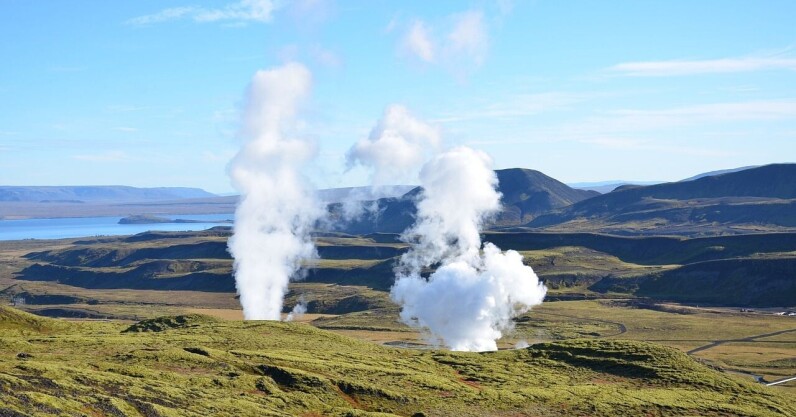
Europe has a long tradition in geothermal energy, with Iceland, France, and Hungary historically dominating the industry. In recent years, however, a range of other countries have entered the sector. Their motivations are clear: geothermal energy is 100% renewable, endless, and reliable. And the attraction has only intensified amid the drive to reduce dependence on Russian natural gas. Currently, Germany is leading the transition. At the end of 2022, the country’s government published a plan targeting a tenfold increase in geothermal output: 10TWh by 2030. “We’re sitting on a gold mine,” Christian Peltl, director of geothermal energy at SWR, the…

This story continues at The Next Web

Monday, 6 February 2023

Mount Everest and Sir George Everest

Mount Everest was named after Sir George Everest despite his lack of connection to the mountain and against his wishes. He opposed the naming due to the difficulties in writing “Everest” in Hindi and the difficulty in pronunciation for local people. in fact, he never got to see with his own eyes the mountain that […]

from Crazy Facts https://ift.tt/DrvIg9O
via gqrds

Saturday, 4 February 2023

EU’s green tech funding plans divides bloc over global subsidy race


The EU’s new green tech funding plan has sparked concerns about an escalating global subsidy race. The initiative was launched in response to the US’ Inflation Reduction Act. The act provides $369 billion of subsidies for green technologies, largely through tax credits for products “made in America.” The incentives have triggered fears that EU companies will be enticed to redirect investment and production to the US. Critics claim the measures amount to protectionism that violates existing trade agreements. In response to the act, the EU this week unveiled the Green Deal Industrial Plan — a roadmap to make the bloc’s…

This story continues at The Next Web

Friday, 3 February 2023

How to market… without a marketing department


How do you set your company apart from other brands? How do you sell people a product they’re not used to? And how is all that possible without a marketing department? John Schoolcraft, Chief Creative Officer at Oatly, has an answer to all these questions. In 2012, together with CEO Toni Petersson, Schoolcraft began to transform a 30-year-old maker of oat drinks into a worldwide movement devoted to promoting a more sustainable lifestyle. We caught up with Schoolcraft at TNW 2022 and learned how Oatly created a thriving marketing strategy… without a marketing department. If you’d like to get his insights in full, check…

This story continues at The Next Web

Thursday, 2 February 2023

Auto industry, take note: This student-made EV cleans the air while driving


An EV that cleans the air while driving might seem like a pipe dream , but a student team based at the Eindhoven University of Technology has made it reality. TU/ecomotive — as the team is called — has been creating inspiring, environmentally conscious concept cars for over a decade now. Among the concept vehicles presented by the students, last year’s Zem — which stands for “zero emission mobility” — is the most outstanding. It’s a passenger EV that not only paves the way towards vehicle carbon neutrality, but also cleans the air while driving, something that, in turn, reduces…

This story continues at The Next Web

Discovering Saskatchewan: 5 Interesting Facts

Saskatchewan has much to offer. In this article, explore the lesser-known aspects of Saskatchewan such as being the largest producer of lentils in the world, a bombing attack during WWII, the 1950s hub for LSD research, the Athabasca Sand Dunes, and a town named Adanac.

from Crazy Facts https://ift.tt/rWfanTh
via gqrds

When Does a Hill Become a Mountain?

Ever wonder when a hill becomes a mountain? Well, it turns out that language, like the universe, likes to resist simplicity… So the answer is- it’s complicated. But that’s not very interesting, so let’s dive into it shall we?

To begin with, turning to our trusty Merriam-Webster Dictionary we have the following definition of a mountain: “a landmass that projects conspicuously above its surroundings and is higher than a hill”

Helpful…

Maybe the Oxford English Dictionary can do better? According to this bastion of English awesome, mountains are “a natural elevation of the earth surface rising more or less abruptly from the surrounding level and attaining an altitude which, relative to the adjacent elevation, is impressive or notable”

As you can see, the dictionaries of the world are slightly less than helpful at nailing down precise specifications of what constitutes a mountain vs a hill. And, it turns out, science and various countries and institutions are equally unhelpful, coming up with a variety of ways to define this in a specific case, though there are some general things to consider when trying to classify a given bump in the ground.

Now, as will come as a shock to absolutely no one, in all such cases, one of the main parameters for distinguishing hills and mountains is size. Tall enough, it’s a mountain and falling short it’s a hill. This would make the problem simple enough if that’s really the only defining attribute accounted for: Find a threshold above which you are atop a mountain and below which you are on a hill.

This is exactly what many countries, including merry old England used to do until the 1920s. Perhaps the most well-known discourse about the subject is the 1990s movie “The Englishman who Went up a Hill but Came Down a Mountain” where some Welsh villagers are appalled with Hugh Grant’s notion that their village’s mountain is – in the eyes of the Central English Bureaucratic Geographic Association – only a hill, but barely.

Moving on from size, another common idea is that a hill is a smooth rounded mound of earth, a bump in the natural landscapes, often remaining unnamed.  A mountain, on the other hand, must have a steep inclination. It thus dominates the landscape, messes with the path of clouds and, of course, has a name.

But this description only pertains to the extreme examples of ragged and spikey terrain. These, however, are merely a characteristic of geologically younger mountains, such as the Andes, the Alps or the Rocky Mountains. Geological grand-dad mountains can have a more smooth surface, such as the Pocono mountains in Pennsylvania.

Thus, to clarify things a bit, in 1936, Roderick Peattie, publisher of “Mountain Geography”, gave mountains three defining characteristics: They should be impressive, they “should enter into the imagination of the people that live in their shadows”, and they should have “individual character” and play a symbolic role in the local area.

If that still sounds vague to you… well, it is. But surely, there must be some harder rules? The answer is… no, not precisely.

As alluded to, until the 1920s, the British Ordnance Survey defined a mountain as a geographic feature rising higher than 1,000 feet (304 meters) from surrounding ground level. This arbitrary line is behind the plot of that Hugh Grant movie, as the villagers had to build up the additional distance needed to reach the threshold. America followed the same trend until the 1970s.

Nowadays, however, as Mr. Peattie suggested, local tradition plays a major role: Generally, a mountain should have a minimum height of 610 metres (2000 feet), but if the locals have always considered their hill a mountain, well, let’s not anger them just for the sake of size. It is, after all, not always about size, but presence and reputation. This is particularly the case if the subject observed is a single elevation in otherwise flat areas, so relativity should also be considered. Similarly, you may be a male the size of a stereotypical jacked up truck owner, but if there are no other men anywhere in a geographical area, we’re sure the ladies will still sing your praises anyway.

Today, the leaders in geography, like the United States Geological Survey (USGS), also do not have an exact definition of “mountain” and “hill”. Instead, the organization’s Geographic Names Information System (GNIS) tries to follow some of the aforementioned few generally accepted characteristics, again, things like climbability, is it characteristic in the landscape, what do the locals consider it, and so on and so forth.

Moving on from hills and mountains, perhaps we can better have clarity with regards to seas and lakes?

To begin with, simply put, if it has a significant amount of salt it is a sea and if it is surrounded by land then it is a lake. Of course, sometimes bodies of water fit both bills, such as the Dead Sea and the Caspian Sea, in which case people just call it as they see it, although sometimes this can have major political ramifications.

For example with the Caspian Sea, its classification is, in fact, a very political issue, as international waters have different legislative status depending if it is a sea or a lake. Adding pressure to the situation is the fact that the Caspian Sea is an area rich in oil and the countries sharing the borders – among others Russia and Iran – are not exactly known as meek in their political stances. So the status of the Caspian… waters has been an ongoing issue for decades. Before the fall of the Soviet Union. The problems were solved with bilateral treaties, as it bordered only the USSR and Iran. But after 1990, the Caspian liquid mass was surrounded by five countries: Azerbaijan, Kazakhstan, Turkmenistan, Russia and Iran.

So the definition of lake or sea made a big difference: A lake would be divided equally among bordering countries. Therefore Azerbaijan, which does not have a very long coastline, would prefer this solution. For seas, on the other hand, according to the UN’s Law of the Sea, the surface and bed are allotted, nearer to shore, according to the length of relevant coastline. So Kazakhstan, which has a long front of the Caspian waters, prefered the solution of calling it “sea”.

In 2018, a convention on the legal status of the Caspian Sea was held. Each neighboring country was granted jurisdiction over 24 km (15 mi) of territorial waters, plus an additional 16 km (10 mi) of exclusive fishing rights on the surface. This doesn’t add up to the full extent of the Caspian Sea, so the rest is considered international waters. The seabed, however, was not defined within the convention and remains subject to bilateral agreements between countries. Ultimately, the Caspian Sea therefore still isn’t a sea or a lake completely, but something in between.

And that’s still not where the controversy ends. When does meandering water become a river vs. a stream? Continents: What’s up with those guys? Are there five? Are there seven? Once more, it depends on the definition and it isn’t unilateral at all.

And when do landmasses stop being islands? Is Australia an island? One definition is that an island is a land mass surrounded by water and smaller than a continent. But for this we go back to the disputed definition of a continent. Oceania, for example, is defined either by its tectonic plate or by the landmasses that reach out of the water.

And so it is that, in our description of the environment, many of the words we use contain all these vague language notions that fail under the scrutiny of precise definition. Feel free to use this information to spark up a heated debate over whether the landmass you’re currently gazing upon constitutes a humble hill, or a mighty mountain!

If you liked this article, you might also enjoy our new popular podcast, The BrainFood Show (iTunes, Spotify, Google Play Music, Feed), as well as:

Bonus Fact:

The highest “mountain” of the Dutch nation is a mere 322 m, and it is located at their southern border, down at the Ardenne… There is a reason we call them the Netherlands.

But never you fear, there is a proposal for a change. A plan in the works that might elevate the Netherlands. In 2011, Thijs Zonneveld proposed the idea for a mountain. Because, sure, why not? To clarify, this would not be like the Dubai buildings, which are in essence tall sticks held up by clever static engineering. The plan was to build an actual mountain, 2 km tall and 5 km wide to dominate all of the Netherlands… Why? Well, you know… for tourism …and so that Dutch athletes have somewhere to train for the Winter Olympics without leaving the country… Tickets to the Alps are expensive apparently?

Unfortunately, with an estimated cost of more than five trillion dollars, it would probably literally be cheaper to build moon colonies than this training facility for Dutch athletes! But you know what they say: National pride is beyond cost…

A counter proposal for the costs is to fill the side of the mountains not needed for ski pistes with solar panels and wind turbines etc, so that you have a “green” mountain that also generates income or at least saves money through generating electricity. Of course, given the sky high costs, let’s just say the view from the Netherlands isn’t likely to change anytime soon.

Expand for References

The post When Does a Hill Become a Mountain? appeared first on Today I Found Out.


source http://www.todayifoundout.com/index.php/2023/02/when-does-a-hill-become-a-mountain/

Wednesday, 1 February 2023

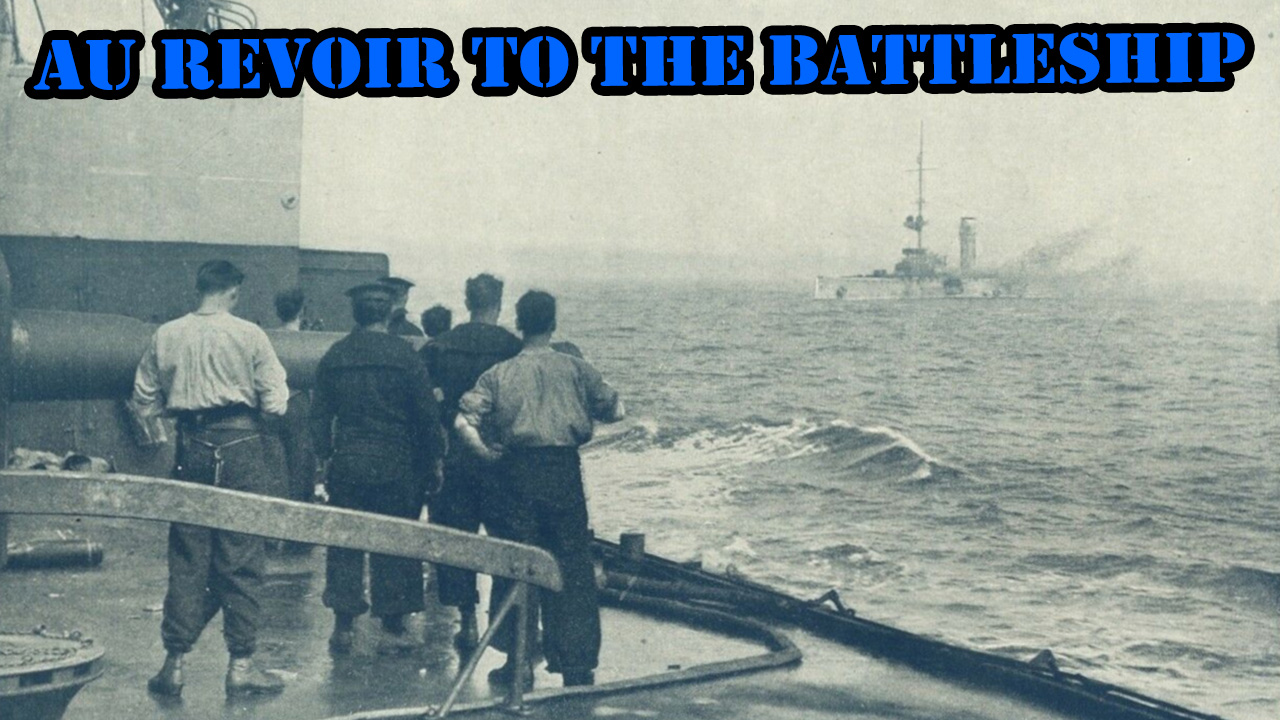
Force Z and the Death of the Battleship

On April 6, 1945, the Imperial Japan launched Operation Ten-Go, a desperate last-ditch naval attack against the Allied fleet supporting the invasion of Okinawa. Supported by the light cruiser Yahagi and eight destroyers, the charge was led by the pride of the Imperial Japanese Navy, the mighty battleship Yamato. A quarter-kilometre long, displacing 65,000 tons, and armed with no fewer than nine 46-centimetre guns firing one-and-a-half-ton shells, Yamato was the largest and most powerful battleship ever built and considered by Japanese high command to be a nigh-unstoppable weapon. But the glorious last ride of the Imperial Navy was not to be; before the task force could even reach Okinawa, it was set upon by over 400 warplanes launched from American aircraft carriers. Less than five hours after first contact, Yahagi, four destroyers, and even the mighty Yamato had been sent to the bottom. More than 4,000 Japanese sailors died in the engagement, for the loss of only 12 U.S. airmen. It was Japan’s last major naval operation of the war, and marked the end of an era. The battleship, once the last word in naval firepower, no longer ruled the seas. In retrospect, the Japanese should have seen this coming, for they themselves had taught the British Royal Navy this same lesson nearly four years before. This is the tragic story of the sinking of Force Z.

After the First World War, the British Empire reached its greatest extent, encompassing more than 26% of the world’s land area and 23% of its population. However, by the 1930s what had long been Britain’s greatest strength was fast becoming its greatest liability. The Empire’s far-flung colonies could only be protected and held together by the Royal Navy, and with post-war budget cuts and the onset of the Great Depression even this mighty force found itself stretched dangerously thin. This made Britain’s overseas territories tempting targets for other up-and-coming imperial powers – including the Empire of Japan. Following their stunning victory over the Russian Empire in the 1904-1905 Russo-Japanese War, the Japanese had come to see themselves as the natural masters of Asia and had pursued a policy of aggressive territorial expansion known euphemistically as the “Greater East Asia Co-Prosperity Sphere”. In 1910 the Japan annexed the Korean Peninsula, while in 1931 Japanese troops annexed the Chinese province of Manchuria and established the puppet state of Manchukuo. This was followed by a full-scale invasion of southern China in July 1937, while in September 1940 the Japanese captured the French colony of Indochina – today Vietnam, Cambodia, and Laos.

The latter development particularly rattled the British, for it placed Japanese forces within easy striking distance of Hong Kong, British Malaya, and the Dutch East Indies – colonies rich in the rubber, tin, and oil the Japanese needed to feed their imperial war machine. Anticipating such an invasion, in 1919 the British had established a large naval base at Singapore and developed the so-called “Singapore Strategy” to deter Japanese aggression. This strategy, developed from a series of war plans over 20 years, was to be carried out in three phases. At the onset of a Japanese attack, the British garrison would man and defend “Fortress Singapore”, holding out while the British Home fleet sailed for the Far East via the Mediterranean, Suez Canal, and Ceylon – today Sri Lanka. On arrival, the fleet would retake Hong Kong and relieve Singapore before sailing on to blockade the Japanese Home Islands. Since the Royal Navy was still the most powerful naval force in the world, the British were confident the Japanese would not risk a direct confrontation and would quickly capitulate. The Singapore Strategy became the cornerstone of British defence strategy in the Far East, its effectiveness considered so assured that, as Royal Navy Captain Stephen Roskill wrote in 1937:

“…the concept of the ‘Main Fleet to Singapore’ had, perhaps through constant repetition, assumed something of the inviolability of Holy Writ”.

But while the Singapore Strategy was impressive on paper, a combination of poor planning, budgetary limitations, political interference, and plain hubris led the British to make a series of major strategic blunders. For example, planners believed that the monsoon season would prevent Japanese forces from crossing the Gulf of Thailand from Indochina to Malaya until at least February 1942. Consequently, most of the aircraft defending the peninsula were diverted for service in the Middle East and Russia. Racist attitudes towards the Japanese also led the British to underestimate the capability of their armed forces, leaving Singapore, Hong Kong, and Malaya poorly garrisoned. As we shall see, this was to have disastrous consequences for the British Empire in the Far East.

There was also another major complicating factor: Nazi Germany. On September 3, 1939, the same day Britain declared war on Germany, the German navy launched a campaign of unrestricted submarine and surface warfare against British and Allied merchant shipping, hoping to starve the island nation into submission. Suddenly, nearly the entire Royal Navy was called upon to counter the Nazi threat, leaving few ships available to defend the Far East. In desperation, Britain called upon the U.S. Navy to contribute ships from its Pacific Fleet, based at Pearl Harbour in Hawaii. But the United States, which was still officially neutral in the conflict, was hesitant to deploy its ships in defence of British colonial interests, and decided instead to focus its efforts on the Atlantic theatre once it entered the war. The British therefore developed a strategy of replacement, whereby American ships deployed into the Atlantic would free up British ships for deployment to the Far East. The full build-up of this Eastern Squadron was to be completed within 80 days after the entry of Japan and the United States into the war, which was anticipated to occur sometime in late 1941 or early 1942.

Thankfully, U.S. President Franklin Roosevelt chose not to wait until the United States had officially entered the war to intervene in the Atlantic, meaning that by August 1941 there was sufficient U.S. Naval presence in the Atlantic for an Eastern Squadron to be deployed ahead of the anticipated Japanese invasion. The question now became: which ships to send? While Prime Minister Winston Churchill favoured sending the most advanced King George V-class battleships, First Sea Lord Sir Dudley Pound and Admiral of the Home Fleet Sir John Tovey disagreed, arguing that the class’s design made it unsuitable for operations in tropical climates. They also wished to keep the more powerful vessels in home waters to counter the German warships Tirpitz, Scharnhorst, and Gneisenau. In the end, however, circumstances decided the matter, for there were only six capital ships in a fit enough state to reach the Far East before the spring of 1942: the King George V-Class battleship HMS Prince of Wales, the Renown-class battlecruiser HMS Repulse, and the four Revenge-class battleships  HMS Revenge, Resolution, Royal Sovereign, and Ramillies.

HMS Prince of Wales was the Royal Navy’s newest and most advanced battleship. Launched in May 1939, she was still being fitted out when on May 24, 1940 she was called out to face the German battleship Bismarck. With workmen from the Vickers engineering firm still aboard scrambling to get her radar and gun-laying systems online, she steamed into the Battle of the Denmark Strait, receiving seven direct hits including a 15 shell that ricocheted through her compass platform killing everyone except the Captain and a signalman. But she gave as good as she got, and managed to land two crippling hits that contributed to the Bismarck’s eventual destruction three days later. After being repaired, in August 1940 Prince Of Wales carried Prime Minister Churchill across the Atlantic to a secret conference with President Roosevelt, then in September was assigned to Force H, escorting supply convoys to the Mediterranean island of Malta.

HMS Repulse, on the other hand, was a much older ship. Launched in January 1916, she participated in the 1917 Battle of Heligoland Bight – her only action of the First World War – and in the 1930s escorted merchant ships during the Spanish Civil War. Due to lessons learned during the war her armour and guns were upgraded in 1918 and again in 1934 and 1940. She was scheduled to receive a further upgrade to her antiaircraft batteries, but her assignment to the Far East task force resulted in this plan being abandoned, leaving Repulse vulnerable to air attack.

The Revenge-class battleships were even older, having been launched between 1913 and 1914. Considered obsolete and no match for the latest Imperial Japanese Navy vessels, the battleships were instead assigned to the 3rd Battle Squadron based in Ceylon, arriving in September 1941.

Meanwhile, Prince of Wales, Repulse, and the escorting destroyers HMS Electra, Express, and Hesperus were organized into Force G, under the command of Admiral Sir Thomas Phillips. Prime Minister Churchill and his naval advisors continued to argue over the composition of the squadron, so in the end a compromise solution was reached. Force G was ordered to sail for Cape Town, South Africa, where it would anchor and await instructions. The Admiralty would then review the strategic situation and decide whether to send the ships on to Singapore or retain them for use in home waters. Repulse, which had just finished escorting a supply convoy around the Cape of Good Hope, was ordered to Ceylon to rendezvous with the rest of the force. While Churchill had recommended the force be escorted by an aircraft carrier, the only available ship, HMS Indomitable, had run aground in Jamaica and would not be ready to sail until November. So, with time of the essence, Force G set off for Singapore without air cover, sailing from Greenock in Scotland on October 25, 1941. Though a far cry from the massive fleet called for by the original Singapore Strategy, Churchill was confident that the “smallest number of the best ships” would be more than enough to deter the Japanese.

Force G arrived in Cape Town on November 16. Admiral Phillips expected to remain in South Africa for at least seven days, a week of social events and media coverage having been planned for propaganda and morale-boosting purposes. But before the Prince of Wales even reached Cape Town, Phillips received orders to depart as soon as possible and rendezvous with Repulse in Ceylon. The anticipated review of Force G’s mission was, in fact, a ruse meant to deceive Winston Churchill; the Admiralty had already committed to carrying out the Singapore Strategy in full.

Meanwhile, Repulse was in Durban, South Africa, preparing to sail to Ceylon. There, her crew received a disturbing portent of things to come as South African Prime Minister Jan Smuts came aboard and delivered an address. While no official record of this speech survives, Able Seaman Ted Matthews later recalled the sobering tone:

From the onset he shattered our conceptions of the Japanese military stating in clear terms that if hostilities erupted we weren’t going to be confronted by a race of inferiors. To the contrary he felt the Japs weren’t in the least concerned by the possibility of conflict with Britain. He also made it clear despite what we’d been told in the past that they possessed a fully modern airforce. Though the one comment that’s never left me were the fatalistic words he feared many of us wouldn’t be returning from this mission and he’d pray for our safety during the troubled times ahead. None of us could possibly have imagined the accuracy of this prophecy.”

Prince of Wales and her escorts remained in Cape Town for only two days, departing on the afternoon of November 18. On November 29, Force G reached Ceylon, where it was joined by Repulse and the destroyers HMS Encounter and HMS Jupiter. Hesperus had already departed before the force reached Cape Town. Admiral Phillips disembarked and flew on to Singapore and the Philippines to meet with Allied commanders, while the fleet sailed on without him, finally reaching Singapore on December 2. On arrival, the destroyers Encounter and Jupiter were found to be suffering from mechanical faults and were replaced by the First World War-vintage destroyers HMAS Vampire and HMS Tenedos. Prince of Wales then entered the dry dock at the Singapore naval base and underwent a thorough cleaning of her hull and boilers.

Then, less than a week later, the long-expected attack finally came.

The Japanese surprise attack on Pearl Harbour on the morning of December 7, 1941 was merely the opening move in a massive, coordinated series of invasions all across Southeast Asia. Indeed, even before the Imperial Navy’s aircraft had even reached Hawaii, Japanese troops landed in Malaya, Hong Kong, the Dutch East Indies, the Philippines, Guam, and Wake Island. As these locations were across the International Date Line from Hawaii, the attacks were recorded as taking place on December 8. That same day, Japanese aircraft based in Indochina bombed Singapore. Force G – now redesigned Force Z – fired at the attacking aircraft while sitting at anchor, but made and received no hits. Once news of the attack reached Britain, Admiral Phillips was ordered to weigh anchor and intercept Japanese invasion convoys steaming across the Gulf of Thailand. Phillips hesitated, for the only Allied aircraft available to protect the fleet were the 10 slow and outdated Brewster Buffalo fighters of No. 453 Squadron RAAF stationed at Sembawang. Admiral Tovey’s misgivings about the ship had also proven correct: the hot, humid climate of Singapore had rendered Prince of Wales’s gun control radars inoperative and degraded her anti-aircraft ammunition, while the ship’s lack of air conditioning had led to increased crew fatigue. Nonetheless, Phillips elected to proceed, believing that Japanese aircraft could not operate so far from land and that Prince of Wales was all but impervious to aerial attack. After all, at that point no capital ship had ever been sunk by aircraft on the open sea. It was a gamble which was to cost him dearly.

Force Z departed Singapore at 17:00 hours on December 8 and sailed north to intercept Japanese forces landing at Khota Bahru on the northeast coast of Malaya. The following day at around 14:00, they were spotted by the Japanese submarine I-65, which shadowed the squadron for 5 hours, reporting their positions. This report soon reached the headquarters of the Japanese Navy’s 22nd Air Flotilla, which had just arrived at airfields in Indochina. At the time, 22nd’s aircraft were loading up with bombs for an attack on Singapore, but upon receiving news of Force Z’s sailing they immediately switched over to torpedoes. However, by the time the aircraft were ready, the sun was beginning to set, and the attack was postponed until the following morning. Meanwhile the Japanese 2nd Fleet was dispatched south from Indochina to intercept Force Z. While the two fleets never spotted each other, just before sunset Force Z was spotted by three seaplanes launched by Japanese convoy escorts. Realizing he had lost the element of surprise, Phillips abandoned his attack on Khota Bharu and turned back towards Singapore.

Just before 1:00 the following morning, Phillips received a radio message indicating that Japanese troops were landing at Kuantan on the east coast of Malaya. At around 7:00 hours Force Z reached the area and Prince of Wales launched a reconnaissance aircraft to investigate. When neither it nor the destroyer Express found anything, Phillips carried on towards Singapore. Little did he know, however, that he had been spotted by the submarine I-58, and that 34 Mitsubishi G3M “Nell” torpedo bombers and 51 G4M “Betty” high-level bombers of the 22nd Air Flotilla were on their way to intercept him.

The first ship the bombers spotted was not, however, the Prince of Wales or the Repulse, but the destroyer Tenedos, which had sailed for Singapore the day before refuel and was now 300 kilometres south of Force Z. Mistaking the destroyer for a battleship, at 10:00 the aircraft dropped several armour piercing bombs on the ship before realizing their mistake and breaking off. Minutes later a Japanese scout aircraft spotted Force Z and called in the rest of the bomber force on its position. The attack had begun.

The first wave of eight bombers attacked around 11:15, focusing exclusively on Repulse. The old battlecruiser proved surprisingly nimble, however, and managed to dodge most of the bombs, suffering only one minor hit to her seaplane hangar. In return, her anti-aircraft gunners damaged five of the attacking aircraft. The next wave arrived at 11:40, dropping eight torpedoes at the two ships. Only one struck home, hitting Prince of Wales’s outer port propeller shaft. The shaft, rotating at full speed, twisted and ripped through the bulkheads, sending 2,400 tons of water pouring into the ship’s engineering compartments. The explosion set off a chain of failures, jamming the ship’s steering, shorting out her electric generators, knocking out her bilge pumps, and preventing her electrically-driven antiaircraft guns from being trained. Fatally crippled, Prince of Wales steamed helplessly northwards and was struck by four more torpedoes and one bomb. Around 13:00, Phillips gave the order to abandon ship.

Meanwhile, Repulse fought on, successfully dodging 19 torpedoes and shooting down three aircraft. At 12:23, however, she, too, was struck by four torpedoes. The ship listed 65 degrees to port, hung on for several moments, then rolled over and sank. Less than an hour later at 13:18, Prince of Wales, pride of the Royal Navy, also capsized and slipped beneath the waves. From start to finish, the attack had taken little more than two hours.

Electra, Vampire, and Express moved in to rescue the survivors. In all, 840 British sailors lost their lives that day – 327 aboard Prince of Wales and 513 aboard Repulse, which had capsized before the order to abandon ship could be given. Of the senior officers, Admiral Phillips and Captain John Leach of the Prince of Wales chose to go down with their ship, while Captain William Tennant of the Repulse was among the survivors. Ironically, while it was Admiral Phillips’s brash decision to sail from Singapore which placed Force Z in the path of the Japanese bombers, it was his caution which sealed the squadron’s fate, for throughout the operation Phillips maintained complete radio silence so as not to give up his position. Indeed, it was not until an hour into the Japanese attack that the first radio signal was sent calling for air support. By this time, however, it was far too late, the aircraft of No. 453 Squadron arriving on the scene just as the Prince of Wales went under. As the squadron’s commander, Flight Lieutenant Tim Vigors later lamented:

I reckon this must have been the last battle in which the Navy reckoned they could get along without the RAF. A pretty damned costly way of learning. Phillips had known that he was being shadowed the night before, and also at dawn that day. He did not call for air support. He was attacked and still did not call for help.”

Back in Britain, Prime Minister Churchill was woken in the middle of the night by news of the sinking, later writing:

“In all the war, I never received a more direct shock… As I turned over and twisted in bed the full horror of the news sank in upon me. There were no British or American ships in the Indian Ocean or the Pacific except the American survivors of Pearl Harbor, who were hastening back to California. Across this vast expanse of waters, Japan was supreme, and we everywhere were weak and naked.”

But the worst was yet to come. Hong Kong fell on December 25 after 17 days of fighting. In Malaya, invading Japanese troops moved with terrifying speed, aided by excellent British-built roads, the inexperience and disorganization of the defending garrison, and an deceptively simple piece of technology: the bicycle – and for more on that, please check out our previous video How Bicycles Caused the Downfall of the British Empire. By January 31, 1942, the defending Commonwealth troops had been pushed off the peninsula and retreated to the island of Singapore, blowing up the Johore causeway behind them. The 85,000-strong garrison fought on for another two weeks, finally surrendering on February 15. Some 140,000 British, Australian, New Zealand, and Indian troops marched into Japanese captivity – the single greatest defeat in British military history. Within months the Japanese Empire controlled a huge swath of Asia and the Pacific stretching from northern Manchuria to the Solomon Islands. It would not be until the Battle of Midway in June 1942 that the tide finally turned and the Allies began the long, bloody island-hopping campaign that would take them from the island of Guadalcanal to Japan’s very doorstep.

By that time, however, the Allies had learned the hard lesson taught them by the tragic loss of Repulse and Prince of Wales. Never again would an allied capital ship operate without a protective screen of aircraft. For as the sinking of the Yamato proved beyond a doubt, the age of the battleship was over. The seas now belonged to the aeroplane.

If you liked this article, you might also enjoy our new popular podcast, The BrainFood Show (iTunes, Spotify, Google Play Music, Feed), as well as:

Expand for References

Keegan, John (ed.), World War II: a Visual Encyclopedia, PRC Publishing Ltd, 1999


Klemen, L, “Seventy Minutes Before Pearl Harbor” – The Landing at Kota Bahru, Malaya, on December 7, 1941, The Netherlands East Indies 1941-1942, https://warfare.gq/dutcheastindies/kota_bharu.html


Garzke et al, Death of a Battleship: The Loss of HMS Prince of Wales, December 10, 1941, https://ift.tt/XTMPCyi


Sinking of the HMS Repulse, History of Diving Museum, https://ift.tt/45ykEJa

The post Force Z and the Death of the Battleship appeared first on Today I Found Out.


source http://www.todayifoundout.com/index.php/2023/01/force-z-and-the-death-of-the-battleship/