Privacy Policy

Sunday, 31 July 2022

Don’t fall for the hype — 6 ways to evaluate a crypto project


This article was originally published on .cult by Michiel Mulders. .cult is a Berlin-based community platform for developers. We write about all things career-related, make original documentaries, and share heaps of other untold developer stories from around the world. So you’ve spotted an eye-catching crypto project, but you’re wondering if it’s safe to actually take the leap and invest? Analyzing crypto projects for investment purposes is an actual skill. You can compare it with fundamental or technical analysis on the stock market. Often, we come across a shiny new crypto project that tries to draw your attention. But isn’t it too…

This story continues at The Next Web

“I never said she stole my money” has 7 different meanings depending on which word you emphasize...

Click here for more...
from #Bangladesh #News aka Bangladesh News Now!!!

Saturday, 30 July 2022

Here are the average salaries for data scientists across Europe in 2022


This article was originally published on .cult by Louis Minvielle. .cult is a Berlin-based community platform for developers. We write about all things career-related, make original documentaries, and share heaps of other untold developer stories from around the world. If you remember our past investigations and analyses, you might remember a curious postulate we put forward: even though their talents are in high demand, it might still be hard for data scientists, developers, and data engineers to know their worth. It’s almost like a brain-teaser: jobs requiring their aptitudes are expected to grow exponentially in the next three years, and…

This story continues at The Next Web

The emotion recognition software used to examine Leonardo da Vinci’s Mona Lisa determined that she...

Click here for more...
from #Bangladesh #News aka Bangladesh News Now!!!

Friday, 29 July 2022

Sprite was originally a Fanta flavor…

Sprite was originally a Fanta flavor. In 1959 Fanta released a lemon-lime flavor, and it was rebranded & became Sprite in 1961.

The post Sprite was originally a Fanta flavor… appeared first on Crazy Facts.


from Crazy Facts https://ift.tt/mz9j73P
via gqrds

Turning over control of the Panama…

Turning over control of the Panama Canal to Panama was a huge controversial emotional issue dividing many Americans in the 1970’s.

The post Turning over control of the Panama… appeared first on Crazy Facts.


from Crazy Facts https://ift.tt/Ip4AClB
via gqrds

The domestic animals of the Faroe…

The domestic animals of the Faroe Islands are a result of 1200 years of isolated breeding. As a result, many of the islands’ domestic animals are found nowhere else in the world.

The post The domestic animals of the Faroe… appeared first on Crazy Facts.


from Crazy Facts https://ift.tt/GAtiUs6
via gqrds

The average Mexican is genetically…

The average Mexican is genetically 50% indigenous with evidence of native ancestry being significantly higher on the X chromosome.

The post The average Mexican is genetically… appeared first on Crazy Facts.


from Crazy Facts https://ift.tt/e8wt2Bp
via gqrds
Mark Twain loved to travel and once wrote, “Travel is fatal to prejudice, bigotry, and...

Click here for more...
from #Bangladesh #News aka Bangladesh News Now!!!

Thursday, 28 July 2022

Study: Just how many remote workers are actually lonely?


Human beings are inherently social creatures, having existed in close-knit hunter-gatherer groups for most of our 200,000-year history. Now we live in a world that is more connected than ever. 5 billion people have access to the internet. Revolutionary communication technologies like Facebook are free to use. These miracles should satiate our ancient need for community, right? Not quite. Paradoxically, loneliness is on the rise. There are many factors at play, but our increasingly virtual living has a lot to do with it. It’s often the same tools that allow people to interact anywhere at any time making them feel…

This story continues at The Next Web

Meta turns to Reels and the metaverse to recover from its first ever revenue loss


For the first time ever since going public in 2007, Meta (aka Facebook) reported a decline in quarterly revenue year over year. The company’s revenue was $28.82 billion — a 1% decrease from $29.07 billion in the second quarter of 2021. What’s worse, it forecasts that growth in the third quarter could fall even more, in the range of $26-28.5 billion. Who’s to blame? Meta attributes this to “the continuation of the weak advertising demand environment” they experienced throughout the second quarter, which they believe “is being driven by the broader macroeconomic uncertainty.” In a Facebook post, Mark Zuckerberg also…

This story continues at The Next Web

Russia’s reportedly building a satellite-blinding laser — an expert explains what that means


Russia is building a new ground-based laser facility for interfering with satellites orbiting overhead, according to a recent report in The Space Review. The basic idea would be to dazzle the optical sensors of other nations’ spy satellites by flooding them with laser light. Laser technology has evolved to the point where this type of anti-satellite defense is plausible, though there is limited evidence of any nation successfully testing such a laser. If the Russian government is able to build the laser, it would be capable of shielding a large part of the country from the view of satellites with…

This story continues at The Next Web

Can an escooter driving school curb bad user behavior?


This week Dott unveiled an experiment to send bad escooter riders back to school. In an industry-first pilot in Rome and Milan, Dott is launching a scheme where bad riders who repeatedly park escooters badly (outside a permitted area or violating the Highway Code) are sent to a driving course.   Specifically, second-time offenders receive a fine from Dott and a guide to parking and local rules. A third violation invites them to attend “a compulsory and free driving course in Autumn 2022.” I spoke to Rob Haycocks, Head of PR Communications at Dott. They told me that the brand is…

This story continues at The Next Web

So many people have cut themselves while trying to slice open avocados that hospital employees often...

Click here for more...
from #Bangladesh #News aka Bangladesh News Now!!!

Wednesday, 27 July 2022

Terrifying or inspiring? Saudi Arabia unveils plan for 170km-long city


Saudi Arabia may be famous for medieval barbarism and oil, but the kingdom is rebranding as a futuristic ecotopia. The latest showcase of this unlikely vision is The Line, a mirrored city that’s 500m tall, 200m wide, and 170km long. The metropolis will purportedly have a population of 1.5 million people by 2045. The project is projected to cost up to $1 trillion. Future residents are promised “a civilizational revolution” with no cars, roads, or emissions. Underground trains will transport them from end-to-end in 20 minutes, and all amenities will be within a five-minute walk. The facilities will be vertically-layered…

This story continues at The Next Web

Why NASA chose gold-plated mirrors for the James Webb telescope


The James Webb Telescope — the largest and most powerful device of its kind ever launched into space — has already yielded some breathtaking images of the early universe. While the telescope itself is a technological wonder, one of its most aesthetically grabbing elements is its 6.5-meter primary mirror, made of 18 hexagonal mirrors, coated with a plating of gold. The James Webb Telescope. Credit: NASA And, yes, that’s real gold — about five men’s wedding rings worth of the metal. We had a question: why? What reason is there for the mirror to be gold-plated? Well, we have the…

This story continues at The Next Web

Or just read more coverage about: NASA

Astronomers have found a VERY sneaky black hole


There is always something new and exciting happening in the field of black hole research. Albert Einstein first published his book explaining the theory of general relativity – which postulated black holes – in 1922. One hundred years later, astronomers captured actual images of the black hole at the center of the Milky Way. In a recent paper, a team of astronomers describes another exciting new discovery: the first “dormant” black hole observed outside of the galaxy. I am an astrophysicist who has studied black holes – the most dense objects in the universe – for nearly two decades. Dormant…

This story continues at The Next Web

Twitter’s beef with Musk is hurting shareholders — and a court case won’t solve that


Elon Musk’s recent highly public back and forth with Twitter has given the market whiplash. Twitter, while initially resisting the tycoon, went on to sign an agreement with him worth US$44 billion (£36.6 billion) in April 2022. The deal placed a 38% premium on Twitter’s then-share price. While the market would expect value to be added on a deal like this, more recent events have pushed the premium up even further. This will not benefit shareholders on either side. Much has changed since Musk’s April offer. Technology stocks have taken a beating due to fears of a recession. Big tech…

This story continues at The Next Web

Or just read more coverage about: Twitter

Women are likely to be more attracted to men whose feelings are a mystery than they are to men who...

Click here for more...
from #Bangladesh #News aka Bangladesh News Now!!!

Tuesday, 26 July 2022

New plans to stop tech giants from buying smaller rivals threaten future innovations


One way to eliminate the competition in business is simply to buy them out and shut them down. And that means less choice for consumers and sometimes the loss of innovative and, in the case of the pharmaceutical industry, even life-saving products. But such so-called killer acquisitions are likely to face greater scrutiny in the US and EU following a recent expansion of competition regulators’ powers. A July 2022 decision by the European Court of Justice has expanded the European Commission’s ability to investigate a wider range of mergers and acquisitions (M&A). And last year, the US Federal Trade Commission…

This story continues at The Next Web

This IoT device will notify you an hour before an Earth-obliterating supernova


Would you like a warning before the world ends?  Well, it’s now possible. Extraluminal is an Internet of Things (IoT) device that will notify you an hour before the Earth is about to be destroyed by a supernova.  What is a supernova?  Supernova N49 was photographed in 2006. Image credit:  NASA’s Marshall Space Flight Center A supernova refers to “the cataclysmic explosion of a massive star at the end of its life. It can emit more energy in a few seconds than our sun will radiate in its lifetime of billions of years.”  Two or three supernovas occur each century…

This story continues at The Next Web

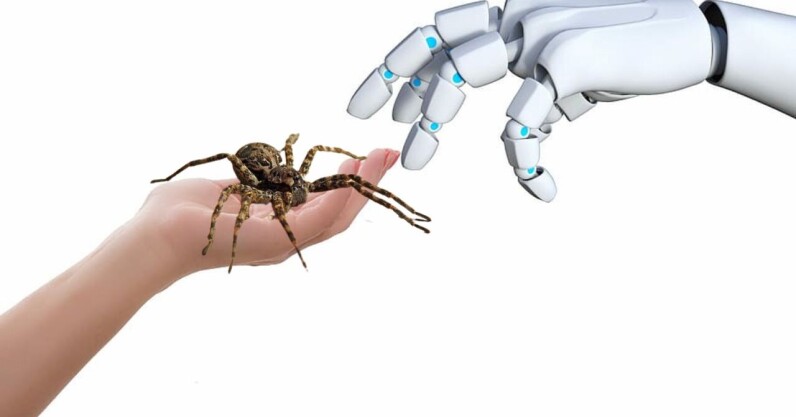
Scientists turn dead spiders into robots able to grip small objects


If you think dead spider robots are something straight out of a horror movie (or your worst nightmares), I have some news for you. Mechanical engineers from Rice University have actually turned spider cadavers into what they call “necrobots,” able to function as mechanical grippers. What’s “necrobotics?” The use of animal characteristics or components to create robotic systems isn’t a novelty in research. Think of bio-inspired and biohybrid robots. On the left: Harvard’s bio-inspired robot, the Octobot. On the right: An example of a biohybrid robot, which is a tissue-engineered ray controlled by light. Credit: Harvard University, Kevin Kit Parket…

This story continues at The Next Web

Looking for a job? 6 expert tips to develop a personal brand that gets you noticed


When was the last time you really thought about your personal brand? Last month? Last year? Never? Contrary to popular opinion, branding isn’t just for large companies or promising startups. As a professional in 2022, personal branding should be right at the top of your priority list. Your personal brand is all about how you present yourself to the world. Amazon founder Jeff Bezos hit the nail on the head when he said, “Your brand is what people say about you when you’re not in the room.” Like it or not, first impressions matter, and your personal branding could be…

This story continues at The Next Web

Scientists calculate the risk of someone being killed by space junk


The chance of someone being killed by space junk falling from the sky may seem ridiculously tiny. After all, nobody has yet died from such an accident, though there have been instances of injury and damage to property. But given that we are launching an increasing number of satellites, rockets, and probes into space, do we need to start taking the risk more seriously? A new study, published in Nature Astronomy, has estimated the chance of causalities from falling rocket parts over the next ten years. Every minute of every day, debris rains down on us from space – a…

This story continues at The Next Web

Johnny Cash took 3 singing lessons as a child. At the end of the third, his teacher told him he...

Click here for more...
from #Bangladesh #News aka Bangladesh News Now!!!

Monday, 25 July 2022

In 1997, three men from Yemen…

In 1997, three men from Yemen sued NASA for landing on Mars.They claimed that they inherited the planet from their ancestors 3,000 years ago.

The post In 1997, three men from Yemen… appeared first on Crazy Facts.


from Crazy Facts https://ift.tt/CJ3MXDn
via gqrds

In 1967 Michigan resident James Osterberg…

In 1967 Michigan resident James Osterberg attended a concert by The Doors (made legendary by Jim Morrison’s lateness and drunken antics). He was so inspired and influenced that his own stage persona evolved into the performer better known as Iggy Pop.

The post In 1967 Michigan resident James Osterberg… appeared first on Crazy Facts.


from Crazy Facts https://ift.tt/xY5RXTn
via gqrds

European or not, make sure your AI business sticks to EU data laws


As we enter a new era defined by artificial intelligence and machine learning, the very foundation of many modern technologies is being put under a microscope by policymakers. That foundation? Data. Data is required for the refinement of most cutting-edge technology, and it will only become more important in future as we develop more sophisticated AI and ML models, fueled by richer, higher quality data sets. However, there are strict regulations around how data can be used, particularly within the EU. The EU’s General Data Protection Regulation (GDPR) mandates that businesses need consent to store subject data in order to…

This story continues at The Next Web

Tech may be global, but our storytelling isn’t — comms tips from TNW conference 2022


“Technology is a bridge between us all. Together we are European tech, united.” These were TNW CEO Myrthe van der Erve’s words during the opening ceremony of TNW Conference 2022. “Tech is evolving,” she says. “To stay ahead, we need to discover the next in tech, now.” Those words are more than idealism, and carry real urgency. We seem to be hopping from health to political to economic crisis. And there was a distinct feeling from attendees at TNW Conference that we need to anticipate change wherever possible, instead of the reactive position in which we currently find ourselves. What…

This story continues at The Next Web

It was practically illegal…

It was practically illegal to own gold in the US from 1933 to 1974. Roosevelt signed an Executive Order to force all citizens to turn in almost all gold for about $20 per ounce, then declared the value of $20 in gold to be worth $35 in paper currency – creating a massive inflation.

The post It was practically illegal… appeared first on Crazy Facts.


from Crazy Facts https://ift.tt/qcBLmYH
via gqrds
Stephen King sells the rights to some of his short stories for $1 so that film students can use them...

Click here for more...
from #Bangladesh #News aka Bangladesh News Now!!!

Research: Depression is probably not caused by a chemical imbalance in the brain


For three decades, people have been deluged with information suggesting that depression is caused by a “chemical imbalance” in the brain – namely an imbalance of a brain chemical called serotonin. However, our latest research review shows that the evidence does not support it. Although first proposed in the 1960s, the serotonin theory of depression started to be widely promoted by the pharmaceutical industry in the 1990s in association with its efforts to market a new range of antidepressants, known as selective serotonin-reuptake inhibitors or SSRIs. The idea was also endorsed by official institutions such as the American Psychiatric Association,…

This story continues at The Next Web

Sunday, 24 July 2022

How to win a hackathon — without coming in first place


This article was originally published on .cult by Dragoș Strainu. .cult is a Berlin-based community platform for developers. We write about all things career-related, make original documentaries, and share heaps of other untold developer stories from around the world. From my experience at hackathons, I understand that it’s not just about winning first place. You participate to learn something new, make connections and have fun. During my first hackathons, I was really focused on winning and didn’t see all the other benefits of going to a hackathon. When I didn’t win, I was so upset that I almost wanted to forget about the whole…

This story continues at The Next Web

Ancient Persian engineers made their own freezers that kept ice cold - even during desert summers....

Click here for more...
from #Bangladesh #News aka Bangladesh News Now!!!

Saturday, 23 July 2022

How I dealt with imposter syndrome as a newbie developer


This article was originally published on .cult by Syk Houdeib. .cult is a Berlin-based community platform for developers. We write about all things career-related, make original documentaries, and share heaps of other untold developer stories from around the world. The worst thing about the imposter syndrome is that it manages to convince you it’s real, even when you know it’s not. Here’s how imposter syndrome affected me in my first month as a developer. I want to share this with juniors in the same situation, as well as seniors who have to work with them. But it’s also for people…

This story continues at The Next Web

Are you a programmer struggling to stay motivated? Here are 5 tips you need to know


This article was originally published on .cult by (author name and link to bio). .cult is a Berlin-based community platform for developers. We write about all things career-related, make original documentaries, and share heaps of other untold developer stories from around the world. Everyone working as a software developer has experienced it at some point. There comes a time when you lose motivation for coding because, at the moment, you can’t solve a particular problem. Some code is not working as it should be and you get frustrated with yourself and don’t know how to go on. Sounds familiar? My experience working in a…

This story continues at The Next Web

R.L. Stine never included divorce, drug use, or child abuse in his Goosebumps books because he...

Click here for more...
from #Bangladesh #News aka Bangladesh News Now!!!

Opinion: OpenAI’s DALL-E 2 is the big tech equivalent of ‘soylent green’


This article contains spoilers for the 1973 film “Soylent Green.” It’s a hot AI summer out here for everyone who has even the slightest interest in putting the “art” in artificial intelligence. I’m talking about DALL-E 2 and OpenAI’s announcement that its incredible text-to-art generator would be entering a closed-beta. Most exciting of all: an additional one million people will gain access to DALL-E 2. Woohoo! Let’s do a cartwheel. Up front: There would be no cartwheels in the Neural offices at TNW that day. DALL-E 2 is, in this humble editor’s opinion, a scam. But that’s nothing new in…

This story continues at The Next Web

Friday, 22 July 2022

Here’s what happened when we let an AI write a movie script


This article was originally published on Built In by the Co-founders of Calamity AI The script starts simply enough: A couple is at the end of dinner. Conversation winds down, the wine is almost finished. After a silence, the man says he wants to play a game. Enter artificial intelligence. Does AI dream of writing screenplays? UsingGPT-3, we developed a short film script called Date Night. Tired of off-kilter AI like Cleverbot, we wanted to use more robust tech in our work. In our experience, previous iterations of AI got sidetracked, were easily confused and had no meaningful memory. You can tell Cleverbot your…

This story continues at The Next Web

Mount Thor in Canada has the world’s longest vertical drop…

Mount Thor in Canada has the world’s longest vertical drop. If you fell off it, you would fall for over a kilometer before you hit anything.

The post Mount Thor in Canada has the world’s longest vertical drop… appeared first on Crazy Facts.


from Crazy Facts https://ift.tt/OnfrtuN
via gqrds
There are whales alive today that were born before Moby Dick was written. Bowhead whales can live to...

Click here for more...
from #Bangladesh #News aka Bangladesh News Now!!!

Kylie Jenner’s flight controversy sends a warning to short-haul eVTOLs


This week, the masses are up in arms with the news that entrepreneur, fashionista, and reality TV star Kylie Jenner uses her $70 million luxury private jet to take short-haul flights. But short-haul travel is far from an anomaly as we usher in an era of eVTOLs (electric vertical takeoff and landing aircraft) for on-demand trips. And it remains, for the near future, the domain of the rich.  So, what’s the controversy with Jenner?  In one of her recent flights, she traveled in California between Camarillo and Van Nuys, a 17-minute flight according to a flight tracker on Twitter.  Kylie…

This story continues at The Next Web

Thursday, 21 July 2022

The EU’s Digital Market Act takes aim at Big Tech’s monopoly


In a huge blow to Big Tech, the EU is stepping up to regulate these behemoths’ long-criticized, monopolist market strategies. On Monday, the European Council adopted the Digital Markets Act (DMA), a set of new rules to create fairer online competition. The act aims to establish a level digital playing field, by setting clear rights and rules for large online platforms (referred to as “gatekeepers”), making it more difficult for them to abuse their position. As per Ivan Bartoš, Deputy Prime Minister for Digitisation and Minister of Regional Development: Thanks to the DMA, we will ensure fair competition online, more convenience for consumers and…

This story continues at The Next Web

Here are the 10 best movies and series about developers


This article was originally published on .cult by Eli McGarvie. .cult is a Berlin-based community platform for developers. We write about all things career-related, make original documentaries, and share heaps of other untold developer stories from around the world. Last year we put together a list of the best hacking movies, and obviously, the next logical step from there was to catalog the coolest movies and series about developers. So, after putting in hours and hours of screentime watching all of these so-called ‘developer films’ from the last two decades, I’m pretty confident I’ve got a solid list of movies…

This story continues at The Next Web

Years before he was elected president, Teddy Roosevelt defeated a bully in a bar fight. As soon as...

Click here for more...
from #Bangladesh #News aka Bangladesh News Now!!!

Why Do We Want to Squeeze/Bite/Pinch Cute Stuff So Badly?

Has this ever happened to you? You are presented with something unbearably cute – a baby, perhaps, or a puppy or a kitten – and are suddenly gripped by an overwhelming desire to pinch, squeeze, crush, or even bite the little thing. You clench your hands, grit your teeth, and maybe even let out an audible growl, so overtaken are you by this sudden rush of aggression. If so, then you are not alone. Known as “cute aggression,” this response is commonly experienced by around 70% of the adult population. But why? At first glance, cute aggression would appear to be evolutionarily maladaptive, increasing our chances of harming the very things – whether human or animal – are supposed to be taking care of. However, recent behavioural and neurological research suggests that this apparently contradictory response may be more psychologically useful than it might at first appear.

While the English term “cute aggression” was first coined in 2013, the phenomenon has been known about for much longer, and many languages even have a specific word for it: for example, “gigil” in Filipino Tagalog, “geram” in Malay, “gemas” in Indonesian, and “muchlovat” in Czech. In behavioural terms, cute aggression is what psychologists call a dimorphous response, in which a positive experience elicits a response usually associated with negative emotions – and vice-versa. Common examples of dimorphous responses include crying during a happy or romantic scene in a movie or laughing uncontrollably when frightened or stressed. In the case of cute babies or animals, the expected response should be an overwhelming desire to care for or protect said creature. Indeed, the very concept of “cuteness” and the instinct to care for cute things are evolutionarily hard-wired into our brains. In 1943, German ethologist Konrad Lorenz proposed what he called the kindenschema or “baby schema,” a set of physical characteristics which our brains interpret as being distinctively “baby-like” and which elicit a strong nurturing instinct. These characteristics include a large, rounded head; a small chin, mouth, and nose; large ears, and large, low-set eyes. The more a face conforms to this archetype, the cuter we consider it to be. Our innate attraction to the kindenschema has even bled over into our treatment of domesticated animals. Dogs, for example, have been selectively bred over thousands of years to appear more and more puppy-like, with floppy ears and more rounded features – such that an adult Labrador  looks considerably younger than a wolf of the same age. The arts and entertainment industry has also taken note of this principle, with cartoons like Mickey Mouse or characters from Japanese manga and anime gradually evolving to possess increasingly childlike features such as rounded heads and disproportionately large eyes.

But if we are hard-wired to care for and protect cute things, why do so many of us also feel like squeezing them so hard? The first formal study to tackle cute aggression – and give it its name – was conducted in 2013 by a Yale University research team lead by neurologist Oriana Aragón. Aragón and her colleagues had 105 online participants fill out a questionnaire featuring such questions as “I can be so happy to see someone that I cry,” “I can be so angry that I laugh,” “If I am holding an extremely cute baby, I have the urge to squeeze his or her little fat legs,” and “I am the type of person that will tell a cute child “I could just eat you up!” through gritted teeth.” The study found that around 64% of respondents confessed to having felt the urge to squeeze a cute baby or animal, while 74% confessed to having acted on that impulse. As a follow-up, the team invited 90 participants to come into the laboratory and watch a slideshow of either cute, funny, or neutral animals. As they watched, the participants were given a sheet of bubble wrap and told to pop as few or as many bubbles as they wanted. Those who watched the cute slideshow popped an average of 120 bubbles, compared to 100 for the neutral slideshow and and 80 for the funny one – providing empirical evidence of an aggressive response to cuteness.

As for why this occurs, Aragón and her colleague Rebecca Dyer hypothesize that cute aggression may serve a regulatory function, allowing people to better control and apply their nurturing instincts. Other neurological studies have shown that cute stimuli activate the mesocorticolimbic or reward system of the brain, and that in certain cases this activation can be overwhelming. As Rebecca Dyer explains: “We think it’s about high positive-affect, an approach orientation and almost a sense of lost control. You know, you can’t stand it, you can’t handle it, that kind of thing.”

According to neurologist Katherine Stavropoulos, in a caretaking situation such an emotional overload could prove detrimental to the child being cared for: “A baby can’t survive alone, but if you’re so overwhelmed by how cute it is and how much you love it, then you can’t take care of it, and that baby won’t survive.”

Aragón and Dyer thus posit that cute aggression might serve as a check to such intense positive feelings, preventing the person from becoming overwhelmed:

“It might be that how we deal with high positive-emotion is to sort of give it a negative pitch somehow, that sort of regulates, keeps us level and releases that energy. It could possibly be that somehow these expressions help us to just sort of get it out and come down off that baby high a little faster.”

To determine whether such a regulating effect was indeed present, in 2018 Stavropoulos and her colleagues at the University of California Riverside conducted an experiment in which 54 participants were exposed to images of both younger and older-looking animals and babies, some of which had been photographically manipulated to make them especially cute. Prior to the experiment participants were given a questionnaire similar to Aragón and Dyer’s, asking whether they had experienced any. Common dimorphous reactions in the past, while afterwards they were asked to describe their emotional reaction to the baby and animal images. Participants were then made to carry out a neutral task such as a word search before being exposed to another batch of images. Stavropoulos hypothesized that not only would those who reported experiencing dimorphous reactions in the past experience more intense emotional reactions to the images, but that they would also experience a less intense reaction in the second session. The results of the study appear to confirm this:

“The expressors of cute aggression are coming down off of that cute-high faster. [But] it could be that they’re just moving back down to baseline because they move more than people that don’t and so it’s really hard to detangle.”

To study the neurological underpinnings of the cute-aggression response, Stavropoulos next wired the participants to an EEG or brainwave monitor and monitored their responses as they watched the baby and animal images. She observed a strong event-related potential or ERP signal which appeared to confirm the results of the earlier study, being stronger in those prone to other dimorphous reactions and weaker on average in the second round of image exposure.

This appears to suggest that cute aggression is part of a complex emotional tug-of-war intended to keep the brain functioning smoothly in the face of powerful emotional stimuli:

“It’s not just reward and it’s not just emotion. Both systems in the brain are involved in this experience of cute aggression. The appetitive side of the reward system is about that forward momentum, the antsy feeling, the pursuit, the urge. So it could be that when we see this aggressive expression, it’s an expression of that urge. It’s showing that you want to get to the baby.”

However, Stavropolous believes that cute aggression might serve another function entirely:

“The very first thoughts were that maybe it is about some sort of emotional homeostasis but we have much stronger and more consistent evidence suggesting it’s something else – a powerful communication signal…[it] reminds you how much bigger and stronger you are physically than this cute little thing.”

Stavropoulos further suggests that the negative facial expressions induced by the onset of cute aggression may communicate to a baby that one is concerned with their welfare and will likely take care of them.

But whatever its ultimate purpose, the fact that cute aggression is not a universal experience is what truly fascinates her:

“When I describe the phenomenon to people, I usually see that about 70 to 75 percent of people nod immediately and know exactly what I’m describing and have experienced it. They think “this is weird; I’m probably the only one who feels this way. I don’t want to hurt it. I just want to eat it.” The other 25 to 30 percent look at me strangely and have no clue what I’m talking about or why anyone would feel that.”

That remaining 25-30% may also offer valuable insights into other, more serious psychological conditions such a sociopathy, psychopathy, or postpartum depression, all of which involve difficulty feeling empathy or nurturing instincts. Cute aggression may also help explain certain aspects of autism, as Stavropoulos explains:

“There’s a lot of literature about people with autism having service dogs with huge success, or having horses they really connect with that help them understand the social world. Maybe they feel the strong caretaking urge but don’t feel overwhelmed, and that’s a strength of theirs.”

The upshot of all of this, however, is that as odd as it might feel, cute aggression is entirely normal. As Rebecca Dyer reassures us: “We don’t have a bunch of budding sociopaths in our studies that you have to worry about.”

So go ahead: squeeze that adorable puppy. You know you want to.

If you liked this article, you might also enjoy our new popular podcast, The BrainFood Show (iTunes, Spotify, Google Play Music, Feed), as well as:

Expand for References

Hamilton, Jon, When Too Cute is Too Much, The Brain Can Get Aggressive, NPR, December 31, 2018, https://www.npr.org/sections/health-shots/2018/12/31/679832549/when-too-cute-is-too-much-the-brain-can-get-aggressive


Stavropoulos, Katherine & Alba, Laura, ‘It’s so Cute I Could Crush It!”: Understanding Neural Mechanisms of Cute Aggression, Frontiers of Behavioural Neuroscience, December 4, 2018


Aragon, Oriana et al, Dimorphous Expressions of Positive Emotion: Displays of Both Care and Aggression in Response to Cute Stimuli, Association for Psychological Science, 2015, Volume 26(3), https://clarkrelationshiplab.yale.edu/sites/default/files/files/Psychological%20Science-2015-Aragón-259-73.pdf


Explainer: What is Cute Aggression? The Conversation, September 9, 2013, https://theconversation.com/explainer-what-is-cute-aggression-16884


Pappas, Stephanie, ‘I Wanna Eat You Up!’ Why We Go Crazy for Cute, Live Science, January 21, 2013, https://www.livescience.com/26452-why-we-go-crazy-for-cuteness.html


Katz, Brigit, Why We Want to Squeeze Cute, Little Things, Smithsonian Magazine, December 31, 2018, https://www.smithsonianmag.com/smart-news/why-we-want-squeeze-cute-little-things-180971143/


Brandt, Katie, Cute Aggression: Why You Want to Squeeze Adorable Creatures, Brain Facts, September 10, 2019, https://ift.tt/zNgKIfe


Mull, Amanda, This is Your Brain on Puppies, The Atlantic, December 11, 2018, https://www.theatlantic.com/health/archive/2018/12/cute-aggression-its-so-fluffy/577801/

The post Why Do We Want to Squeeze/Bite/Pinch Cute Stuff So Badly? appeared first on Today I Found Out.


source http://www.todayifoundout.com/index.php/2022/07/why-do-we-want-to-squeeze-bite-pinch-cute-stuff-so-badly/

The Surprisingly Long and Determined Effort to Create a Flying Submarine

In our previous video, The Surprisingly Long and Determined Effort to Create a Literal Flying Tank, we looked at how designers in the 1930s and 40s devoted a considerable amount of time and effort trying to combine two of the 20th Century’s most revolutionary weapons of war: the tank and the aeroplane. But as ill-conceived and ultimately futile as these projects were, they were far from the strangest attempts to create a hybrid military vehicle. That dubious distinction instead belongs to an improbable series of efforts to mash together the two unlikeliest of vehicles: the aeroplane…and the submarine.

It will come as no surprise to regular viewers that the first nation to tinker with such a vehicular abomination was the Soviet Union. In 1937, while studying at the Dzerzhinsky Naval Engineers’ Academy in Saint Petersburg, Soviet engineer Boris Ushakov drafted a technical proposal for a vehicle which could operate both in the air and underwater. Featuring thick, stubby wings resembling a manta ray and a pair of floats for takeoff and landing, Ushakov’s flying submarine would be powered by three 800-horsepower gasoline engines on the surface and an electric motor underwater, giving it a maximum speed of 100 knots in the air and 3 knots submerged. Once the craft landed, the transition from aeroplane to to submarine would be accomplished by sealing off the engine compartments with retractable metal plates and flooding empty spaces in the wings and floats, causing the craft to submerge. The cockpit would also be flooded, forcing the crew to retreat into a watertight compartment complete with conning tower and periscope from which the submarine would be controlled. The craft’s armament was to be two 18-inch torpedoes mounted under the hull.

But what possible use could any Navy have for such an outlandish vehicle? As absurd as it might seem, Ushakov’s concept actually filled a number of roles that aircraft and submarines of the time could not. While fast, agile, and able to carry large weapons payloads, aircraft of the 1930s were far from stealthy, a fact which became increasingly relevant with the wide-scale adoption of radar. On the other hand, submarines, while stealthy, were also extremely slow underwater and largely blind, relying on periscopes and hydrophones to track and home in on their targets. Aircraft and submarines were also largely ill-suited to attacking enemy ships in harbour, which were typically defended by extensive antiaircraft batteries and antisubmarine obstacles like booms and nets. Throughout the 1930s and 1940s, there were numerous attempts to solve these tactical shortcomings, such as the development by several nations of midget submarines capable of infiltrating harbours and other protected spaces. This approach was pioneered by the Italian Navy, whose elite Decima Flottiglia MAS unit of combat frogmen used specially-designed human torpedoes nicknamed maiale or “pigs” to carry out a series of daring raids against Allied shipping in Alexandria, Malta, and Gibraltar. The maiale were copied by the British – who dubbed them “Chariots” – and, along with more conventional midget submarines known as X-Craft, used in a number of unsuccessful attempts to sink the German battleship Tirpitz at her anchorage in Norway. Japanese Type A Ko-hyoteki  midget submarines participated in the 1941 attack on Pearl Harbour and two 1942 attacks on Sydney Harbour and Diego Suarez Harbour in Madagascar, while various German midget submarines like the Neger, Seehund, and Biber carried out attacks on Allied shipping in the English Channel in the final years of the war. However, none of these vehicles proved as effective as their designers had hoped. For one thing, they had a limited range, requiring them to be carried close to their target, launched, and retrieved by a larger mother submarine. They were also slow, difficult to control, and despite their small size, easily spotted and engaged by enemy defensive forces. Consequently, the vast majority of midget submarine operations ended in the death or capture of their crews.

Another potential solution to the stealth-vs-speed conundrum was the submarine aircraft carrier. In the 1920s, a number of submarines were built to carry a small reconnaissance floatplane in a special watertight hangar behind the conning tower. Once the submarine had surfaced, the aircraft would be removed from its hangar, assembled, and launched using a steam catapult built into the deck. Upon completing its mission, the aircraft would land alongside the submarine and be hoisted aboard using a crane. While both the French Surcouf and British HMS M2 cruiser submarines possessed this capability, the most famous submarine aircraft carriers ever built were the Japanese I-400 class. The largest submarines ever fielded during WWII and the largest ever built until the 1960s, the I-400s were designed to carry and launch three folding Aichi M6A Seiran floatplanes, each capable of carrying 900 kilograms of bombs. The Japanese Navy planned to use these unusual weapons to attack the Panama Canal, San Diego, and Ulithi Atoll, but Japan surrendered before any of these plans could be carried out. The three completed I-400s were captured by the Americans, examined, and scuttled to prevent the Soviets from learning their technological secrets.

But as impressive as they were, the I-400s suffered from a fatal flaw. Launching and retrieving aircraft took up to 45 minutes and could only be done while the submarines were on the surface, making them highly vulnerable to detection and attack. Boris Ushakov’s flying submarine, on the other hand, neatly solved this problem. The craft could theoretically cover vast distances of ocean at high speeds, allowing it to track down and shadow an enemy fleet. It could then land, submerge, and use the cover of darkness to attack the fleet before stealthily slipping away. The craft was also well-suited to infiltrating harbours, able to fly over minefields, anti-submarine nets, and other defences before landing in the harbour basin, submerging, and attacking enemy shipping using torpedoes. Indeed, the Soviet Navy saw sufficient merit in Ushakov’s idea to submit his proposal to its Scientific Research Committee for evaluation. But while the concept made it through two rounds of official evaluations and revisions, it was ultimately rejected as too impractical, and Ushakov’s vehicular chimera never made it off the drawing board.

But the allure of the flying submarine never truly died, and the following decades would see numerous attempts to resurrect the concept. In 1961, American inventor Donald V. Reid of Ocean Township, New Jersey, cobbled together various discarded aircraft parts to create a working flying submarine, which he rather unimaginatively dubbed the Reid Flying Submarine or RFS-1. Though far smaller than Ushakov’s design at only 10 metres in length, Reid’s vehicle worked on exactly the same principle. Looking like something out of a contemporary James Bond movie, in the air, RFS-1 was powered by a 65-horsepower engine and propeller mounted on a tall pylon behind the cockpit, while underwater it was propelled by a 1-horsepower electric motor, diving being accomplished by flooding the craft’s fuselage and twin pontoons. The transition from flying to diving, however, was a less than elegant process, requiring the pilot to remove the propeller and seal off the engine pod using a rubberized cloth cover. The craft’s open cockpit also required the pilot to use Scuba gear to breathe while submerged. Nonetheless, on June 9, 1964, RFS-1 made the world’s first – and thus far only – full-cycle flying submarine flight over the Shrewsbury River, flying at 10 metres altitude before submerging and achieving a speed of 2 knots at a depth of 2 metres. While the craft’s immense weight limited it to making short, low-altitude hops, Reid proved that a flying submarine was a workable proposition, inspiring dozens of future efforts to perfect the concept.

In the same year as Reid’s historic flight, the Proceedings of the U.S. Naval Institute published a study by Naval hydrodynamics engineer Eugene Handler examining the feasibility of a flying submarine. As in Boris Ushakov’s original 1937 concept, such craft were envisioned for use against enemy shipping in harbour or in closed, heavily-defended waters like those of the Baltic, Black, or Caspian seas. As the Navy article states:

“Handler writes of a possible craft with an operating depth of 25 to 75 feet, a submerged speed of five to 10 knots for four to 10 hours, airspeed of 150 to 225 knots for two or three hours and a payload of 500 to 1,500 pounds. He says it is believed these characteristics can be attained within a vehicle weighing 12,000 to 15,000 pounds. A little flying sub might carry out its mission and take its crew back. It could, Handler says, fly from a favourable location to its destination at minimum altitude to avoid detection by radar. At the completion of its underwater mission it could travel as a submersible to a location best suited for takeoff, become airborne and return to base…. The Bureau of Naval Weapons has recently awarded a contract to the Convair and Electric Boat Divisions of General Dynamics for analytical and design studies of the essential components and operational aspects of such a vehicle.”

In the same article, Handler also acknowledges the various technical and bureaucratic obstacles which had long held back the development of a flying submarine, stating that:

“The development of a practical flying submarine prototype will be both complex and laborious, but the potential returns are substantial and valuable. Consequently the concept of such a vehicle merits careful engineering examination rather than the overly optimistic accolade of a few imaginative enthusiasts and the simultaneous cold shoulder denial of the hard headed realist.”

Inevitably, like every other flying submarine project, Handler’s concept also never made it off the drawing board. However, it may have directly inspired an iconic piece of pop culture. While developing the 1965 television series Voyage to the Bottom of the Sea, producer Irwin Allen hired researcher Elizabeth Emanuel to compile an archive of existing underwater technology on which to base the show’s vehicles and props. Among the material Emanuel uncovered in her research was the U.S. Navy’s flying submarine study, which is thought to have inspired the very similar stingray-shaped vehicle prominently featured in the show and which first introduced the concept of the flying submarine to the general public.

One of the fundamental flaws with the flying submarine concept is the need for a strong watertight compartment for the crew, which significantly increases the weight of the vehicle and makes it difficult to achieve flight. If the crew are eliminated altogether, however, then this particular engineering problem suddenly becomes a whole lot simpler. The first attempt to launch an unmanned aerial vehicle or UAV from a submarines was made in 1946, when a U.S.-built version of the WWII German V-1 cruise missile called the JB-2 Loon was test-launched from the deck of the USS Cusk. These experiments ultimately resulted in the development of the SM-N-8 Regulus, the U.S. Navy’s first submarine-launched nuclear missile. While a significant leap forward, the Regulus was a fundamentally flawed weapon. Carried in special water-tight compartments built into the submarine’s hull, the Regulus could only be extracted and launched one the submarine had surfaced. This made Regulus-equipped submarines extremely vulnerable to detection and attack, just like the Japanese I-400 submarines before them. This problem was eventually solved by the development of the Polaris and Trident ballistic missiles and the Tomahawk cruise missile, which could be launched while the submarine remained safely submerged.

In 1991, the Strategic Arms Reduction Treaty or START signed by the United States and the Soviet Union left the U.S. Navy wondering what to do with half of its ballistic missile submarines, whose nuclear payloads had been outlawed by the treaty. This resulted in a flurry of proposals for alternative non-nuclear weapons to occupy this considerable underwater real estate. Among these was Project Cormorant, first proposed in 2003 by DARPA, the Pentagon’s advanced research projects agency. Officially designated the Multi-Purpose Unmanned Aerial Vehicle or MPUAV, the Cormorant was a 6-metre-long jet-powered drone designed to be launched from a submarine missile tube. Pushed out of the launch tube by compressed air, the Cormorant would rise to the surface before being launched into the air by a pair of rocket boosters. The wings would then unfold, the jet engine inlet and outlet would open, and the vehicle would fly off on its reconnaissance mission, covering a distance of up to 800 kilometres. Upon completing its mission, the Cormorant would return and parachute into the sea, whereupon the launching submarine would deploy a Remotely Operated Vehicle or ROV to attach a cable to the drone, allowing it to be winched back into its launch tube. While hardly the exotic convertible vehicle of Boris Ushakov and Donald Reid’s imaginations, the Cormorant nonetheless solved the decades-long problem of combining the speed and maneuverability of an aircraft with the stealth of a submarine. Unfortunately, in 2008 the MPUAV project fell victim to budget cuts and, like all its predecessors, the Cormorant was never built.

Yet Ushakov’s dream still lives on, and shortly after the cancellation of Project Cormorant, the Naval Surface Warfare Center in Carderock, Maryland, released yet another proposal for a true flying submarine. 6 meters long with a 30-metre wingspan, the vehicle was designed to carry two crew and six Special Forces troops up to 1,200 kilometres by air or 20 kilometres underwater. While it is as yet unknown whether the Carderock flying submarine was ever built and tested, the fact that this absurd James Bond-esque vehicle continues to capture the imagination of Naval designers after nearly a century just goes to show that sometimes truth is sometimes stranger than fiction.

If you liked this article, you might also enjoy our new popular podcast, The BrainFood Show (iTunes, Spotify, Google Play Music, Feed), as well as:

Expand for References

Handler, Eugene, The Flying Submarine, U.S. Naval Institute Proceedings, September 1964, http://www.waterufo.net/flyingsubs/NavyFlyingSubHtml1.htm


The Dream of Flying Submarines and Aircraft Carriers, National Interest, April 28, 2019, https://nationalinterest.org/blog/buzz/dream-flying-submarines-and-aircraft-carriers-54782


MPUAV, Lockheed Martin, February 17, 2012, https://www.youtube.com/watch?v=8mCTVvh-zPE


Ganjin Please Ushakov LPL, https://www.reddit.com/r/Warthunder/comments/jjo5j6/ganjin_please_ushakov_lpl/


The Flying Submarine Story, FliteTest, October 25, 2018, https://ift.tt/ifk4Nvs


Hand, Jill, Weird NJ: The Flying Submarine of Ocean Township, App.com, July 23, 2017, https://ift.tt/xDNJvpq

https://ift.tt/ifk4Nvs

The post The Surprisingly Long and Determined Effort to Create a Flying Submarine appeared first on Today I Found Out.


source http://www.todayifoundout.com/index.php/2022/07/the-surprisingly-long-and-determined-effort-to-create-a-flying-submarine/

The Curious Case of the Extreme Sport Mensur

The modern sport of classical fencing has come a long way from its origins in the 15th-Century practice of duelling. Over the past 600 years swords became blunted, protective equipment increased, and rules steadily codified to produce a safe, formalized Olympic sport in which serious injuries are rare. But at the same time, another, more brutal form of fencing also survived, clinging to existence in university basements and clubhouses across Europe. It is a form of ritualized swordplay so steeped in the traditions of duelling and martial honour that not only are injuries common, they are actually encouraged. Welcome to the hardcore world of Mensur, or German Academic Fencing.

Mensur is a practice unique to Studentenverbindungen or student corporations, a kind of fraternity common to universities in German-speaking countries like Germany, Austria, and Switzerland and Baltic states like Latvia and Estonia. These societies, which date back to the Middle Ages, are built around the notion of lifelong brotherhood among their members and carry out a number of elaborate rituals to reinforce this bond, including the wearing of couleur, distinctive caps and ribbons bearing the corporation’s colours; the kneipe, or ceremonial gathering; and Mensur.

Deriving its name from the Latin word for “dimension” – referring to the distance between participants – Mensur is a formal duel between two individuals fought using special sharpened, basket-hilted sabres called mensurschläger. Unlike in traditional fencing, fighters – or Paukanten – stand a fixed arm’s length apart and are forbidden from moving their feet or even dodging their opponents’ blows. There is also no scoring nor any designated winner or loser. This is because the aim of Mensur is not swordsmanship, but rather to demonstrate one’s courage and character by taking an opponent’s blows without fear or flinching. As Hermann Rink, former head of the Association of Old Corps Students explains:

“The object and purpose of [student corporations] was and still is solely the education of students to become a strong, free and cosmopolitan personality who is not held back by religious, racist, national, scientific or philosophical limitations of the mind. The need to overcome one’s own fear, dedicated to the union of his Corps, and the connected strengthening of the sense of community aids the personal growth just as does taking a hit without losing one’s stand and accepting the assessment of the Mensur by the own Corps Brothers.”

These notions of courage, honour, and the ability to endure hardship unflinchingly were considered central to the German character for hundreds of years, and were instrumental in preserving and maintaining the practice of Mensur up to the present day. The role of Mensur in defining a student’s character is perhaps best exemplified by the associated culture of duelling scars. Though Mensur bouts are carried out with sharpened swords, as the aim is not to kill or seriously wound one’s opponent the combatants wear elaborate protective gear including a long padded or chainmail shirt, a throat protector, a gauntlet on the sword hand, and metal goggles with a nose protector. During the bout only hits to the head are permitted, with the bout ending when first blood is drawn. The resulting scar, known as a “smite” or schmiss, has long been considered a badge of honour, with German Chancellor Otto von Bismarck once declaring that a man’s courage and bravery could be judged by the number of scars on their cheeks. In the 19th and early 20th centuries, duelling scars – and the corporation membership they indicated – were seen as a sign of a man’s ability to hold government office; indeed, in 1928, 20% of senior civil service positions in Prussia were held by former members of the Kösener student association. Scars were also thought to enhance a man’s eligibility as a potential husband, leading many who were unable attend university or join student corporations to cut their faces with razors to achieve the same effect. Those with actual duelling wounds also often picked at their scabs to deepen and enhance the resulting scars. As most student corporation members were also members of the aristocracy and many aristocrats became military officers, the practice of Mensur eventually lead to the cliché of the scarred German officer. Indeed, many prominent military leaders up to the Nazi era – including SA leader Ernst Röhm and SS Commando leader Otto Skorzeny – bore prominent duelling scars on their faces.

Despite its eventual longevity, Mensur nearly disappeared at numerous times throughout its history, only to reappear and adapt itself to the changing times. While modern Mensur emerged around the mid-19th Century, the tradition of student duelling stretches back 15th Century, when the court sword or Kostümdegen was an essential part of everyday aristocratic dress. While the common people were forbidden from carrying swords, in many German principalities an exception was made for university students so they could defend themselves if attacked while travelling to and from school. This, unsurprisingly, lead to an explosion of duelling, with students fighting each other over the slightest perceived insult to their honour. These affairs were very often deadly, as the preferred duelling weapon, a thrusting rapier known as a Pariser or “Parisian” sword, could easily inflict lethal puncture wounds. In the 17th century an attempt was made to curb these so-called strassenrencontre or “street fights,” through the introduction of the kartellträger, or regulated duel. Instead of fighting each other on the spot, the aggrieved parties would agree to meet at a prearranged time and place, the duel being overseen by a referee, the duellists’ “seconds”, and a doctor to tend to any injuries.These duels were fought not to the death but typically to the drawing of first blood, the aim being to secure satisfaction for the insulted party. But due to the thrusting nature of the combat many duellists still died, and it was not until the 1760s that the University of Göttingen introduced a new type of slashing sword known as the Göttinger Hieber. This was soon adopted by many German-speaking universities, causing a dramatic drop in the death rate.

In 1763 following the Seven Year’s War, Frederick the Great, King of Prussia, outlawed street duels and the public wearing of swords by civilians, resulting in legalized duelling becoming the exclusive preserve of military officers and university students. At first duels were reserved for resolving disputes and perceived insults, but as more and more students without actual grievances sought to prove their courage and skill on the duelling ground, a formal system of challenges was developed. This involved uttering a standard code-phrase – typically “dummer junge,” or “stupid boy” – which was not just an insult but rather an invitation to duel. But by the mid-19th Century this too was abolished in favour of the Bestimmungsmensur or “determining duel”, wherein rather than challenging each other, combatants were instead chosen by the vice-chair of their student corporation. These duels were no longer about settling disputes but rather proving one’s character, and fighting one became a prerequisite of entry into a corporation. This is considered the birth of modern Mensur.

The latter half of the 19th Century saw an explosion in the popularity of Mensur, especially in Prussia a phenomenon attributed to two major factors: extended peace and government reforms. For much of Prussian history the officer corps was the exclusive preserve of the aristocracy, but in 1859 sweeping military reforms lead to the creation of a new reserve army whose leadership was open to members of the middle class. Aristocratic officers, seeing this as a challenge to their elite status, took to fighting duels in order to demonstrate their superior breeding and character. Between the end of the Franco-Prussian War in 1871 and the outbreak of the First World War in 1914, the newly-unified Germany fought no major conflicts, and an officer corps thirsting for combat turned once again to Mensur to preserve their martial spirit. During this period German chancellor Otto von Bismarck also implemented sweeping government reforms including lowering taxes and introducing social security, one result of which was to allow many middle-class students to attend university for the first time. Like the officer corps, the largely aristocratic student corporations saw these new arrivals as a threat to their elite status, and Mensur as one means of preserving it. By the late 19th Century Mensur was so popular in Germany that Mark Twain devoted several chapters of his 1880 travelogue A Tramp Abroad to it.

Yet despite its popularity, Mensur was about to face one of the first major challenges to its existence. While by this time Mensur had become one of the safest sports in Europe – placing behind even cycling in terms of annual deaths – accidents still happened, and in 1877 the death of a student fencer at the University of Göttingen lead the German government to ban Mensur outright. However, the practice still continued, with secret duels taking place in the basements of student corporation clubhouses across Germany. In 1890, Kaiser Wilhelm II carried out an investigation into the prevalence of Mensur in Germany, at the conclusion of which he declared: “[Duelling provides] the best education which a young man can get for his future life.”

This royal endorsement effectively overturned all previous prohibitions on Mensur, and the practice enjoyed yet another surge in popularity. It would remain popular until the mid-1930s when it was officially banned by the Nazi regime. Hitler’s quarrel lay not with Mensur itself but rather with the student corporations who practiced it, whom he saw as representing the old aristocratic class whom he despised. Hitler was also suspicious of the strong bond of brotherhood between corporation members, which he believed undermined loyalty to the state. But just like in the 1880s, Mensur did not disappear; it simply went underground. Student corporations, forced by the Nazis to suspend their activities, instead reorganized as “comradeships” like the Hermann Löns group in Freiburg, which continued to host Mensur duels in secret. Indeed, over 100 recorded duels were fought in Freiburg alone throughout the Second World War.

After the war, the occupying Allied forces banned all military sporting organizations in Germany. While Mensur had only been practiced by students for decades, its martial nature and heritage was deemed sufficient for it to be included in the ban. This prohibition lasted until 1953, and while Mensur quickly reestablished itself at many German universities, it would never again come close to the popularity it enjoyed in the late 19th Century. Today Mensur is practiced by around 400 student corporations across Germany, Austria, Switzerland, Belgium, Poland, and the Baltic States, though in some countries like Switzerland the practice is frowned upon as excessively violent, with many corporations turning to other sports like extreme hiking as an alternate means of building character and brotherhood. But many students still swear by this medieval trial by combat and the brutal but vital lessons it teaches. As Albrecht Fehlig, spokesman for the Student Corps Associations, explains: “Some people regard honour as an old-fashioned term. We see it in close relationship with human dignity. Corps students are obliged to respect the dignity of other persons and not to tolerate a violation of their own dignity. This has a significant effect on our social life and contributes to the unique atmosphere of a corps house.”

If you liked this article, you might also enjoy our new popular podcast, The BrainFood Show (iTunes, Spotify, Google Play Music, Feed), as well as:

Expand for References

History of European Martial Arts Part X – Academic Fencing – Mensur, Academy of Historical Martial Arts, December 14, 2016, https://ift.tt/rs1EhV9 martial-arts-part-x-academic-fencing-mensur


Scull, J.C, Dueling Scars: the Badge of Honour of Many Nazi Officers, Medium, July 17, 2020, https:// medium.com/history-of-yesterday/dueling-scars-the-badge-of-honor-of-many-nazi-officers-8bfc72f1dfa


Morin, Roc, Fighting for Facial Scars in Germany’s Secret Fencing Frats, Vice, February 17, 2015, https://www.vice.com/en/article/av4bp4/frauleins-dig-them-0000573-v22n2


Jackson, Patrick, My Germany: Student Fencer, BBC News Berlin, September 11, 2013, https:// www.bbc.com/news/world-europe-23975881


Young, Patrick, Die Waffen Hoch! The Resiliency of Academic Fencing in Germany, University of Florida College of Liberal Arts and Sciences, April 20, 2011, https://ift.tt/1mIsWy9

The post The Curious Case of the Extreme Sport Mensur appeared first on Today I Found Out.


source http://www.todayifoundout.com/index.php/2022/07/the-curious-case-of-the-extreme-sport-mensur/

Wednesday, 20 July 2022

Deepfakes are taking over TikTok — here’s how you can spot them


One of the world’s most popular social media platforms, TikTok, is now host to a steady stream of deepfake videos. Deepfakes are videos in which a subject’s face or body has been digitally altered to make them look like someone else – usually a famous person. One notable example is the @deeptomcriuse TikTok account, which has posted dozens of deepfake videos impersonating Tom Cruise and attracted some 3.6 million followers. Deepfakes gained a lot of media attention last year, with videos impersonating Hollywood actor Tom Cruise going viral. In another example, Meta CEO Mark Zuckerberg seems to be confessing to…

This story continues at The Next Web

Solid-state tech can reduce EV batteries’ CO2 emissions by nearly 40%


One of the biggest criticisms against EVs is that they’re not as green as you might think due to the CO2 emissions produced by their lithium-ion batteries. These occur during the extraction of lithium and during the battery’s manufacturing process. However, new research by Minviro, a company specialized in raw material life-cycle analysis, has found that an emerging battery technology can significantly reduce an EV’s carbon footprint: solid-state batteries. They promise to decrease battery emissions by almost two-fifths. The analysis compared a NMC-811 solid-state battery — one of the most promising chemistries being developed — to current lithium-ion technology. Both…

This story continues at The Next Web

Eleanor Roosevelt held her own…

Eleanor Roosevelt held her own press conferences where only female journalists were allowed. This ensured they kept their jobs during Depression-era layoffs, earning a steady income & professional status.

The post Eleanor Roosevelt held her own… appeared first on Crazy Facts.


from Crazy Facts https://ift.tt/ZNE4mAl
via gqrds

A trio of drunken boys decided…

A trio of drunken boys decided to sail out to sea looking for a girl they saw at a sports competition event. They ended up sailing for more than seven weeks and drifted 1300 km off course before being rescued by a tuna boat. They all survived by drinking beer, eating coconuts and a bird.

The post A trio of drunken boys decided… appeared first on Crazy Facts.


from Crazy Facts https://ift.tt/iIsoEKw
via gqrds
Turning your left cheek toward the camera makes you more attractive. Many artists have shown a...

Click here for more...
from #Bangladesh #News aka Bangladesh News Now!!!

Engineers in Japan to build artificial gravity habitat on the Moon by 2050


It sure looks like a lot of fun when we see videos of astronauts floating around in zero-gravity environments. But did you ever stop to think what prolonged weightlessness does to the human body? We’ll spare you the details, but suffice to say it isn’t pretty. And that means any crewed missions to the Moon, Mars, or anywhere else beyond the Earth’s gravitational field have an undeniable time limit on them. Until we solve the whole gravity problem, permanent off-world colonies are pretty much a non-starter. And, despite what a century of science fiction may have led you to believe,…

This story continues at The Next Web

Tuesday, 19 July 2022

You go, gramps! Older people are using TikTok to dispel myths about aging


During the lockdown, my 65-year-old mother did something that actually shocked me. She started going on to TikTok so she could watch and follow her favorite “Dancing Dadi” – which means grandmother in Hindi. I was genuinely taken aback to discover that my mother – who is completely technophobic – had bought an iPad, got a high-speed internet connection, and figured out how to create a TikTok account, all just to watch uninterrupted Dancing Dadi. While I appreciate that few sights are more entertaining than an Indian granny amusing others with her wicked dance moves, there had to be something…

This story continues at The Next Web

Homeland Security is tracking US citizens using phone location data


The American Civil Liberties Union (ACLU) has published thousands of pages of previously unreleased documents, which reveal how the Department of Homeland Security (DHS) is buying access to the location data of millions of US citizens’ cell phones. The warrantless purchase by various parts of the DHS — including Customs and Border Protection (CBP) and Immigration and Customs Enforcement (ICE) — was first reported by The Wall Street Journal in 2020. In response to the news, ACLU filed a Freedom of Information Act (FOIA) request to DHS, ICE, and CBP, followed by a respective lawsuit. While the litigation is still ongoing,…

This story continues at The Next Web

Or just read more coverage about: Security

IBM unveils a bold new ‘quantum error mitigation’ strategy


IBM today announced a new strategy for the implementation of several “error mitigation” techniques designed to bring about the era of fault-tolerant quantum computers. Up front: Anyone still clinging to the notion that quantum circuits are too noisy for useful computing is about to be disillusioned. A decade ago, the idea of a working quantum computing system seemed far-fetched to most of us. Today, researchers around the world connect to IBM’s cloud-based quantum systems with such frequency that, according to IBM’s director of quantum infrastructure, some three billion quantum circuits are completed every day. IBM and other companies are already…

This story continues at The Next Web

Or just read more coverage about: IBM

Buy these Mercedes headphones to show everyone how poor (and ugly) they are


There’s a simple problem with driving an expensive car: you’re not always in it. Sometimes, there will be moments, awful, heart-wrenching moments where everyone in your vicinity won’t know that you own a vehicle that, objectively, makes you better than everyone else. But, friend, dry your leaking eyes moistening face. Because Mercedes-Benz has teamed up with Master & Dynamic to make several pairs of headphones that will finally to let people around you know how idiotic and disgusting and destitute they are. The logo that proves you’re a person of style and grace. So, the two companies recently announced the…

This story continues at The Next Web