Privacy Policy

Monday, 31 January 2022

This is the best word to start Wordle with, according to science


If you’ve been on any social media platform in the past two weeks, you’ve probably seen a grid of green, yellow and black squares. This is the latest pandemic phenomenon called Wordle – a free online game that gives users a new word puzzle each day. It was created by Josh Wardle for his crossword-loving partner. As of January 10, the game has 2.7 million players. In Wordle, players have six tries to guess a target five-letter word. Every time they make a guess, they are told which letters in their guess are in the word and in the correct…

This story continues at The Next Web


Biden’s Build Back Better bill aims for ‘zero fatalities’ on US roadways


Last week, the US Department of Transportation Secretary announced the National Roadway Safety Strategy launch. The strategy aims to respond to a national crisis: deaths and serious injuries involving cars and heavy trucks. It’s a collaborative effort between a range of government departments, such as the National Highway Traffic Safety Administration and Federal Motor Carrier Safety Administration, to centralize many tasks and responsibilities under a central plan. It gets its funding from the bipartisan Build Back Better bill. I took a look through the 40-something page document, and I’m summarising the main points for you and offering some analysis.  The…

This story continues at The Next Web


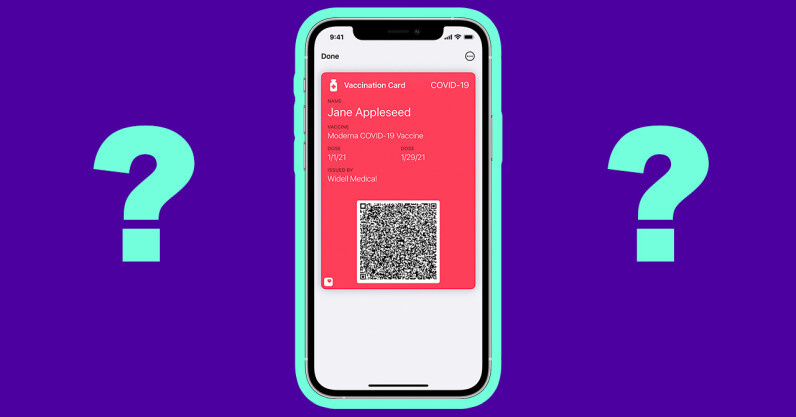
You can add your COVID vaccination certificate to the Apple Wallet… but should you?


The modern world hurts my brain. Let’s take the news that Apple enables users to store their COVID vaccination certificates in the Wallet and Health apps as an example. When I first heard about it, I was pumped. Flashing my QR code to enter a restaurant or grab a coffee would be far simpler if it sat in my Apple Wallet. Friends, the time I’d save! But, of course, the world had something to say about that. While putting my digital certificate of vaccination in an easy-to-access place is cool… is it safe? And because I can do it, does that…

This story continues at The Next Web

Or just read more coverage about: Apple


Next up in Apple’s plan for financial domination: Turning iPhones into payment terminals


After its introduction in 2014, Apple Pay has made spending seamless for swathes of people. Now, the company wants to move to the other side of the aisle. This time, to accept payments. Last week, Bloomberg reported that Apple is planning to introduce a new feature in the coming months that will let merchants accept card payments directly through their iPhones. In short, it wants to make its device a payment terminal or a point of sale (POS) machine.  How will it work? The report noted that this feature will be part of a software update in the coming months. So…

This story continues at The Next Web

Or just read more coverage about: Apple


Silly string is used in military combat to check for booby traps. Troops can spray the substance to...

Click here for more...
from #Bangladesh #News aka Bangladesh News Now!!!

There are no more than 12 Kmart stores…

There are no more than 12 Kmart stores remaining in the US. At its peak in 1994 there were 2323 stores in the US and 2486 globally. Until 1990, when it was surpassed by Walmart, it was the second largest retailer in the US after Sears.

The post There are no more than 12 Kmart stores… appeared first on Crazy Facts.


from Crazy Facts https://ift.tt/Hn42mtAdX
via gqrds

The Ritchie Boys was a group of…

The Ritchie Boys was a group of German-born Jews who fled their homeland, came to America, and then joined the U.S. Army to use their knowledge of the German language and culture to return to Europe and fight Nazism.

The post The Ritchie Boys was a group of… appeared first on Crazy Facts.


from Crazy Facts https://ift.tt/2FrKsMOmN
via gqrds

Use these questions to spot a toxic work culture during your interview


Earlier this year, a viral article on Fast Company gained attention around the world. In the piece, entitled ‘How to spot a toxic culture by reading between the lines of a job ad’, writer Stephanie Vozza discussed how to interpret some of the key phrases company’s use to get down to what the work culture is really like. For example, if a job advertises free snacks, meals and drinks, could that mean that you’ll be expected to work long hours and not leave the office during lunchtime? Or, if a business says they have a small “tight-knit team” could you…

This story continues at The Next Web


A Corpse an Audacious WWII Plan to Score a Major Victory for the Allies

Winston Churchill once wrote “In war-time, truth is so precious that she should always be attended by a bodyguard of lies.” Throughout the Second World War, the subtle art of deception proved time and time again to be among the Allies’ most formidable weapons. Prior to the 1942 Battle of El Alamein, the British disguised their tanks as ordinary trucks in order to move them up to the front line unnoticed, while in the buildup to D-Day, through a combination of phony radio traffic, captured German agents, and fields of wooden planes and inflatable tanks, Allied intelligence managed to conjure an entire army division out of thin air and convince the German that the invasion force would land not in Normandy but the Pas-de-Calais. But perhaps the most audacious and bizarre deception of the war was Operation Mincemeat, a macabre undertaking centred around the drowned corpse of one Major William Martin, a man who never existed.

By the end of 1942 the Allied had pushed the Germans and Italians out of North Africa and were pondering their next move. Winston Churchill favoured an invasion of Italy, which he saw as the “soft underbelly” of the Axis. And the obvious stepping-stone for such an invasion was the island of Sicily. There was only one problem: this route would also be obvious to the Germans, and the mountainous terrain of Sicily strongly favoured the defenders. But another possibility was to invade Sardinia and Greece, which would place Allied forces within striking distance of vital Axis oil facilities in the Balkans. If the Germans could somehow be convinced that the Allies were actually landing in Greece, the invasion of Sicily might have a greater chance of succeeding.

The task of fooling the Germans fell to naval intelligence officer Lieutenant Commander Ewen Montagu and Squadron Leader Sir Archibald Cholmondley (“Chum-lee”) of the Twenty Committee, an inter-service intelligence organization so-named because “twenty” in Roman numerals is “XX”, or “Double-Cross.” The bizarre deception plan Montagu and Cholmondley cooked up was inspired by a document known as the “Trout Memo” which had been circulated among Allied intelligence personnel in 1939. While attributed to Rear Admiral John Godfrey, it is now believed that the memo was actually written by his assistant Ian Fleming, the creator of James Bond. In the memo, Fleming compared military deception to fly-fishing, and listed 51 potential deception plans which could be used against the enemy.  Deception number 28, which Fleming described as “not a very nice suggestion” involved planting false documents on a corpse and dropping it over enemy territory. This, in turn, had been inspired by the 1937 novel The Milliner’s Hat Mystery by former police chief and spy catcher Basil Thompson. Montagu and Cholmondeley believed that a suitably disguised corpse would be an ideal vehicle for leaking falsified intelligence to the enemy, and soon began working on an elaborate scheme codenamed Operation Mincemeat.

The task facing Montagu and Cholmondley was formidable, with many intricate details needing to be worked out. At first they considered dropping a corpse into enemy territory on a half-opened parachute, but this was quickly abandoned for a number of reasons. First, no Allied airman would be carrying the highly-secret documents the pair wished to leak. Second, military couriers were not permitted to fly over enemy territory lest they be shot down; and third, any corpse the pair were likely to obtain would be several days old and could never be made to look freshly-deceased. Instead, Montagu and Cholmondley decided to drop the corpse from a submarine off an enemy-held coast, making it look like the body of a man who had crashed at sea and drowned. The pair quickly ruled out disguising the corpse as a naval officer, as this would require a custom-tailored uniform, and instead chose to make him an officer of the Royal Marines, allowing him to be dressed in standard off-the-rack battle dress. Spain was chosen as the insertion point as while the country was nominally neutral, it had pro-German leanings and hosted a well-established network of German spies.

The next order of business was to actually find a suitable corpse. While Britain in WWII had no shortage of bodies, nearly all were already spoken for, and making indiscreet inquiries would have raised undue suspicion. According to Montagu’s 1953 memoir The Man Who Never Was, he and Cholmondley had nearly given up when they happened upon a young man who had died of pneumonia, and convinced the family to release his body on the condition his identity never be revealed. The body was ideal for their purposes, as its fluid-filled lungs would closely resemble those of a man who had drowned at sea. However, in 1996 amateur historian Roger Morgan determined that the corpse actually belonged to one Glyndwr Michael, a homeless Welshman who died in an abandoned London warehouse after accidentally eating rat poison. As Michael had no next of kin, Montagu had no trouble convincing Bentley Purchase, coroner of St. Pancras District, to turn over the body and store it in the morgue until needed. Yet still other historians such as Ben Macintyre and Anna Pukas doubt that the corpse could have been Michael’s, arguing that his unhealthy and emaciated body would have been a poor match for a young and fit Marine officer. Instead, they suggest that the corpse belonged to John Melville, a sailor aboard the aircraft carrier HMS Dasher which exploded and sank in the Clyde River on March 27, 1943. However, Montagu dismissed the need for a perfect physical resemblance, stating:

“He doesn’t need to look like an officer – only a staff officer.”

With a body secured, Montagu and Cholmondley set about crafting an identity for their fictitious officer. Time was of the essence, for the body could only be kept refrigerated for three months, after which it would be too decomposed to be convincing.  Glyndwr Michael soon became Captain (Acting Major) William Martin of the Royal Marines, the surname “Martin” being chosen as it was among the most common on the Naval register. This meant that the report of his death could be easily mistaken for that of another, real Major Martin. The rank of Acting Major was also carefully chosen as it high enough to justify him carrying of top-secret documents but not high enough that anyone important would be expected to know him.  The documents Major Martin was to carry included a fake letter written by Lieutenant General Archibald Nye, vice-chief of the Imperial General Staff, to General Harold Alexander in Tunisia, outlining the Allies’ intent to invade Sardinia and Greece. In an inspired bit of subtle spycraft, the letter did not explicitly spell out the Allied plan but rather spoke around it in such a way that the true meaning could not be missed. And in a classic double-feint, the document written to imply that the attack on Sicily – the preparations for which the Germans could hardly have missed – was actually a diversion for the actual invasion. To corroborate this letter, Major Martin also carried a letter from Lord Louis Mountbatten, chief of Combined Operations, to Admiral Andrew Cunningham, introducing Martin as an expert in landing craft being loaned to Cunningham’s staff. The letter even contained a joke about sardines being rationed in Britain, a pun so stereotypically British Montagu and Cholmondley believed the Germans would swallow it hook, line, and sinker.

In order to look the part, the corpse was dressed in a standard uniform, a trench coat, and a life preserver. Fearing that the largely Catholic Spaniards would be hesitant to rifle through the corpse’s pockets, Montagu and Cholmondley instead placed the documents in a locked leather briefcase with a chain of the type used by bank couriers, the chain being wrapped through the belt loops of Major Martin’s trench coat to prevent it from floating away.

However, it would take more than just a name and a briefcase of documents to fool German intelligence; For the deception to work, Major Martin had to appear like a formerly living, breathing human being complete with personal interests, relationships, and foibles. And in this Montagu and Cholmondley overlooked no detail, carefully crafting a complete identity through various pieces of litter placed in the corpse’s pockets. Major Martin was made to appear somewhat careless in his personal affairs via angry letters from his creditors, unpaid bills, an overdraft statement from his bank, and a stern letter from his Father regarding his finances. Even his identity card was a temporary replacement for one previously lost. Martin was also given an imaginary girlfriend named Pam, whose photograph – actually of Montagu’s secretary Jean Leslie – he carried in his pocket. Other secretaries also contributed love letters from Pam for added authenticity. The effect was completed by the addition of a St. Christopher’s medal, a matchbook, cigarettes, a bill from Martin’s tailor, a receipt for an engagement ring, keys, theatre ticket stubs, and other odds and ends, all carefully coordinated paint a realistic picture of Major Martin’s last days in London. For his identity card, Montagu and Chomondley first tried to photograph the corpse, but  this proved unconvincing and they instead used a picture of MI5 Captain Ronnie Reed, who bore a passing resemblance to the body.

Major Martin was placed in a specially-designed canister filled with dry ice and carried aboard the Royal Navy submarine HMS Seraph, which departed Britain on May 19, 1943. For security reasons the crew were told that the canister contained an experimental meteorological device, with only the boat’s Captain, Lt. Norman Jewell, and a handful of senior officers being informed of the mission’s true nature. After being accidentally attacked twice en route by British aircraft, on April 29 HMS Seraph surfaced off the coast of Huelva, Spain. In the early hours of the next morning Major Martin’s body was brought on deck, and after a brief ceremony where Lt. Jewell read from the 39th Psalm, was placed in the water, the wash from the submarine’s propellers being used to push him towards the shore. At around 9AM a Spanish fisherman picked up the body and carried it to shore, where it was handed over to the Spanish Admiralty. The game was now afoot.

The Spanish authorities immediately contacted Francis Haselden, the local British consul, and offered to hand over Major Martin’s effects. Strangely, Haselden refused, insisting that the items be submitted through official channels. A frantic exchange of diplomatic cables between Haselden and London ensued, with London urging Haselden to obtain the items as quickly as possible. Of course, this had all been meticulously planned beforehand to convince the Germans of the documents’ authenticity, the British knowing that their diplomatic codes had been broken. Thus the existence of the body and its briefcase came to the attention of two German agents stationed in Spain, Karl-Erich Kühlenthal and Adolf Clauss, who on the instructions of German intelligence chief Admiral Wilhelm Canaris attempted to intercept the secret documents. Despite pressure from the Germans the Spanish refused to hand over the briefcase and instead sent it to the naval headquarters at San Fernando. Here the contents were photographed but the letters were not opened. It was not until the briefcase reached Madrid that the Spanish finally acceded to German demands, with a thin metal rod being used to roll up the still-damp letters so they could be removed through the envelope flap without breaking the seal. The letters were then dried, photographed, and re-soaked in salt water before being re-inserted into the envelopes. On May 8 the photographs were passed to Kühlenthal, while on May 11 the briefcase and its contents were returned to Haselden, who forwarded it to London in the diplomatic bag. Meanwhile, Major Martin’s body had been given a cursory autopsy by a Spanish coroner, confirmed to have died of drowning and exposure, and buried in a Huelva cemetery with full military honours.

When the briefcase finally arrived back in London, an examination of the envelopes confirmed that they had been opened by the Germans. Not only did the letters curl up into a cylinder when removed, but an eyelash placed in the envelope by Montagu was conveniently missing. Indeed, Kühlenthal believed the intelligence to be so important that he personally carried it to Berlin, where German intelligence confirmed its authenticity to the High Command. On May 12, Adolf Hitler issued an order declaring:

“Measures regarding Sardinia and the Peloponnese take precedence over everything else.”

Confirmation that the Germans had taken the bait came two days later, when codebreakers at Bletchley Park decoded a German signal indicating that an entire panzer division of 90,000 men had been moved from Sicily to Greece. Montagu sent an urgent telegram to Churchill, then in Washington D.C. for the Trident Conference, reading:

Mincemeat swallowed rod, line and sinker by the right people and from the best information they look like acting on it.”

The Allied invasion of Sicily, codenamed Operation Husky, began on July 10, 1943. By August 17 the armies of General George S. Patton and Field Marshal Bernard Montgomery had taken the island at a loss of only 5,500 killed and 14,000 wounded – far less than Allied planners had feared. The capture of Sicily lead to the collapse of the government of Italian dictator Benito Mussolini and provided a springboard for the subsequent Allied invasion of the Italian mainland – and all largely thanks to the valiant actions of a dead man.

What is perhaps most impressive about Operation Mincemeat is how easily the whole thing could have gone wrong. For example, had Major Martin’s corpse been examined by a more experienced coroner, it would have been realized that it was missing many of the hallmarks of a body which had been floating at sea for days, such as crab and fish bites and dull, brittle hair. Fortunately, the Germans were prevented from examining the matter too closely by the need to appear as though they were unaware of the corpse’s existence, and they were thus forced to take the Spanish at their word regarding its authenticity. Also fortuitous for the Allies were the specific German agents involved in the case. Kühlenthal, due to his Jewish ancestry, was overly eager to please the German High Command and had a long history of passing on bad intelligence. The intelligence analyst tasked with examining the documents in Berlin, Alexis Baron von Roenne, also hated Hitler and did everything in his power to sabotage the Nazi war effort. Even Admiral Canaris, head of German Military Intelligence, actively worked against the Nazi regime, meaning it is possible that most involved in the case did not actually believe the ruse at all. But the Mincemeat documents confirmed what Hitler already believed, and whether or not they influenced his decision to move his troops from to Greece, that decision was instrumental in the fall of Sicily.

In life he was Glyndwr Michael, a homeless drifter who died a horrible death alone and forgotten, while in death he became Major William Martin, a war hero who helped secure a vital Allied victory in the Mediterranean. He still lies buried under that name in Nuestra Señora cemetery in Huelva, while on the Welsh war memorial in Aberbargoed he is listed as “Y Dyn Na Fu Erioed”: “The Man Who Never Was”.

If you liked this article, you might also enjoy our new popular podcast, The BrainFood Show (iTunes, Spotify, Google Play Music, Feed), as well as:

Expand for References

Dead Man Floating: World War II’s Oddest Operation, NPR, June 12, 2010, https://www.npr.org/templates/story/story.php?storyId=127742365

Re: The Man Who Never Was – Operation Mincemeat, Wikileaks, February 19, 2013, https://wikileaks.org/gifiles/docs/12/1233808_re-the-man-who-never-was-operation-mincemeat-.html

Lane, Megan, Operation Mincemeat: How a Dead Tramp Fooled Hitler, December 3, 2010, https://www.bbc.com/news/magazine-11887115

Zabecki, David, This Man Pulled off one of the Greatest Deceptions in Military History – After His Death, HistoryNet, November 1995, https://www.historynet.com/this-man-pulled-off-one-of-the-greatest-deceptions-in-military-history-after-his-death.htm
The post A Corpse an Audacious WWII Plan to Score a Major Victory for the Allies appeared first on Today I Found Out.


source http://www.todayifoundout.com/index.php/2022/01/a-corpse-an-audacious-wwii-plan-to-score-a-major-victory-for-the-allies/

Sunday, 30 January 2022

Stop hyping batteries, it’s pumped hydro that will save the planet


To cut U.S. greenhouse gas emissions in half within a decade, the Biden administration’s goal, the U.S. is going to need a lot more solar and wind power generation, and lots of cheap energy storage. Wind and solar power vary over the course of a day, so energy storage is essential to provide a continuous flow of electricity. But today’s batteries are typically quite small and store enough energy for only a few hours of electricity. To rely more on wind and solar power, the U.S. will need more overnight and longer-term storage as well. While battery innovations get a lot of…

This story continues at The Next Web


3 ways Sony can fight back against Microsoft


Sony has had a rough few days. The Japanese tech giant has lost a whopping US$14 billion (£10 billion), or about 9% of its total value, since rival Microsoft’s announcement that it is purchasing popular videogames maker Activision Blizzard for nearly US$70 billion. While some of Sony’s loss is arguably due to short-term panic selling across the wider market, the company is clearly in a corner. PlayStation is Sony’s largest, most profitable, and fastest-growing business, and the loss of a key supplier of games content to its arch-rival could make its consoles less attractive to gamers around the world. Sony…

This story continues at The Next Web


Abraham Lincoln was a ‘crazy cat lady’. He regularly took in strays at the White House and was...

Click here for more...
from #Bangladesh #News aka Bangladesh News Now!!!

Saturday, 29 January 2022

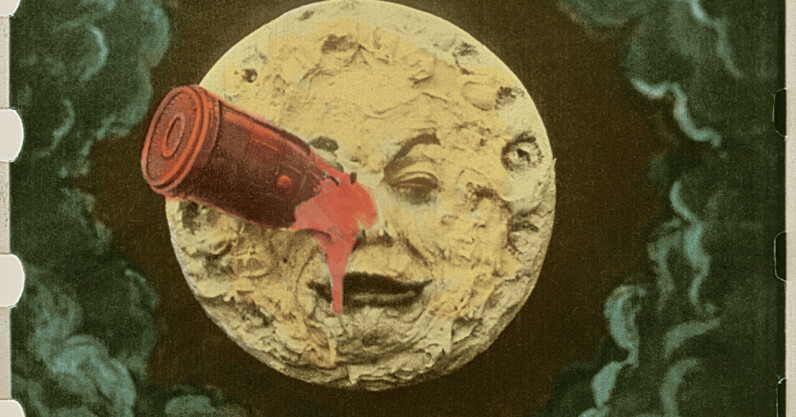
SpaceX’s derelict rocket will crash and create a worrying new Moon crater


It’s not often that the sudden appearance of a new impact crater on the Moon can be predicted, but it’s going to happen on March 4, when a derelict SpaceX Falcon 9 rocket will crash into it. The rocket launched in 2015, carrying Nasa’s Deep Space Climate Observatory (DSCOVR) probe into a position 1.5 million kilometers from the Earth, facing the Sun. But the expended upper stage of the rocket had insufficient speed to escape into an independent orbit around the Sun, and was abandoned without an option to steer back into the Earth’s atmosphere. That would be normal practice, allowing stages…

This story continues at The Next Web


If you keep your cool when being criticized, you’re more likely to have high self-esteem - but if...

Click here for more...
from #Bangladesh #News aka Bangladesh News Now!!!

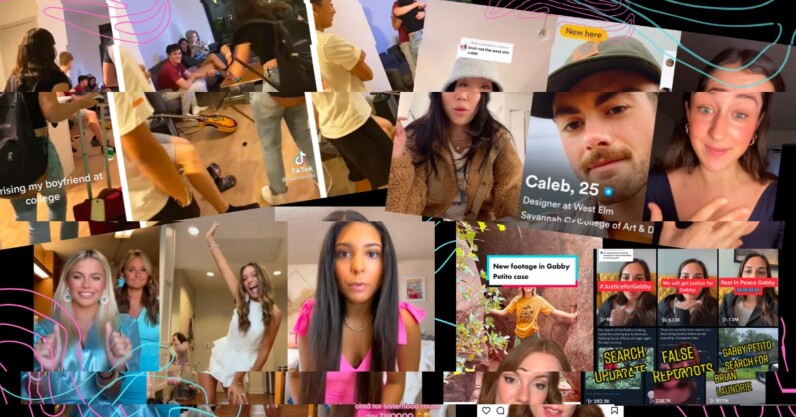
From Couch Guy to West Elm Caleb: How TikTok replaced modern-day tabloids


Can you believe Makayla was dropped from Bama Rush? Do you think Couch Guy was cheating? Did you see Gabby Petito’s last post before she went missing? If you don’t spend much time online, you may not recognize these names. But on TikTok, their stories became sensationalized, memeified, hashtagged and rehashed. The most recent is “#WestElmCaleb.” Women took to TikTok to share their experiences of being peppered with affection, strung along and ultimately ghosted by a New York City-based designer named Caleb, who became the exemplar for the worst aspects of online dating culture. Together, these stories represent the emergence…

This story continues at The Next Web


r/antiwork’s train wreck Fox News interview shows moderators aren’t leaders


The runaway anti-work train had a brutal crash on Fox New this week. The driver of the mangled vehicle was Doreen Ford, a moderator of the wildly popular r/rantiwork subreddit. The sub had exploded from 180,000 subscribers in October 2020 to almost 1.7m this month. That growth was dramatically stalled by Ford’s appearance on Fox. The interview was an obvious setup. A right-wing network had found an ideal target to denigrate a leftist movement: a 30-year-old dog walker who works 20 hours a week and wants to teach philosophy. When the cameras started rolling, she appeared unprepared and uncomfortable. The…

This story continues at The Next Web


The 4 biggest science breakthroughs that Gen Z could live to see


The only difference between science fiction and science is patience. Yesterday’s mainframes are today’s smartphones and today’s neural networks will be tomorrow’s androids. But long before any technology becomes reality, someone has to dream it into existence. The worlds of science and technology are constantly in flux. It’s impossible to tell what the future will bring. However we can make some educated guesses based on recent breakthroughs in the fields of nuclear physics, quantum computing, robotics, artificial intelligence, and… Facebook’s name change. Let’s set our time machines to “January 28, 2100” to take an imaginary gander at the four most…

This story continues at The Next Web


Friday, 28 January 2022

Wordle fans love feeding their brains puzzles — but they aren’t getting any smarter


In recent weeks, a web-based word puzzle called Wordle has become a popular daily distraction. Suddenly, millions of people are focused on their vocabulary of five-letter words, and are newly aware of concepts like letter frequency and letter position as they strategize about the best opening words and faster solutions. For these people, Wordle is captivating. Previous research can help us understand how our brains respond to word games, and why we love them. Wordle is a single-player puzzle that combines elements of several games, including Scrabble and Battleship. My colleagues and I have studied Scrabble as a way of…

This story continues at The Next Web


A KGB agent and a CIA agent became…

A KGB agent and a CIA agent became friends while trying to recruit each other; they knew the other was a spy and just didn’t talk about it.

The post A KGB agent and a CIA agent became… appeared first on Crazy Facts.


from Crazy Facts https://ift.tt/33T39gf
via gqrds

Laws restricting Chinese people…

Laws restricting Chinese people to merchant visas made many Chinese restaurants in the U.S. These visas were only for fancy shops and the person had to run it for a year. Some groups used all their cash to open a nice restaurant and then switch who ran it each year so that they’d all get […]

The post Laws restricting Chinese people… appeared first on Crazy Facts.


from Crazy Facts https://ift.tt/3gbm9c1
via gqrds

The Real Story Behind Spider-Man

According to an anecdote told by Stan Lee in virtually every interview he’s ever given about Spider-Man, the genesis of the hero began when he saw an insect crawling up a wall while brainstorming ideas and figured that a hero who could stick to walls would be kind of cool. In reality though, the origins of everyone’s favourite friendly neighbourhood Spider-Man are a little less cut and dry.

For starters, Stan Lee himself admitted in his own autobiography, Excelsior!: The Amazing Life of Stan Lee, that the “seeing an insect crawl up a wall” story is one that he has told so often to so many people that he can’t really remember if it’s true or something he came up with as it made a good story to tell the public. Which explains why the story, as consistently as Lee has tried to tell it over the years, has slight variations depending on when and to whom it was being told. For example in some versions Lee saw the insect (usually a fly) while he sat in his office in 1962, and in others he saw it while literally pitching the hero to his boss, and in others it was something he remembered as being cool from many years earlier.

When asked about why he came up with such an obscure power for a hero, in another case, Lee explained that the decision was made partly out of frustration that he thought that he’d pretty much done everything else at that point. In his own words, The big thing with superheroes is you have to try to do something different. I thought, ‘What superpower could I give him?’. I had already done somebody who was very strong, I did a woman who could turn invisible, I did a guy who could fly. I was thinking, ‘What’s left?”

The heroes referenced by Lee in that quote for non-comic fans who inexplicably decided to view this anyway are The Incredible Hulk, the Invisible Woman and the Human Torch. The latter two heroes are best known for being founding members of Marvel’s first family, The Fantastic Four, co-created by Lee and first introduced in 1961, while the former was introduced in may of 1962 and was also co-created by Lee.

Again, according to another popular anecdote by Lee, before settling on Spider-Man, Lee came up with and rejected several other insect-themed names including Gnat Man, Insect Man, and Mosquito man. Again, this story has been told so many times that there exist multiple variations, but they all say essentially the same thing- that Lee came up with the name “Spider-man” while brainstorming and felt that it just fit, which isn’t really the whole story either.

You see, Lee also stated that he was a huge fan of The Spider, a fictional character hailing from the pulp magazines of the 1930s, and that this character directly influenced the creation of Spider-Man.  In the vein of similar pulp heroes like The Shadow and the Green Hornet, The Spider was a wealthy man who adopted an alter ego to wage a one-man war on crime, often brutally killing criminals and branding their corpses with a spider-shaped mark to serve as a warning to others, hence the name, The Spider.

Save for the use of Spider imagery, The Spider and Spider-Man share virtually nothing else in common, making it fairly obvious that the only facet of the Spider-Man character The Spider influenced was his name. That said, according to Lee, he came up with the name Spider-Man independently, but was convinced that it was the right name when he recalled the name of The Spider’s comic, “The Spider – Master of Men!” And how dramatic he’d found it as a child. As a slight tangent, Spider-Man co-creator, Steve Ditko had claimed that Lee was a big fan of the DC hero Hawkman and has mentioned that he feels that this likely influenced the name “Spider-Man” in some way.

Whatever the case, although Lee liked the name, his publisher to whom he had to pitch the character, Martin Goodman, hated it, reportedly telling him “People hate spiders”. Another aspect of the character Goodman took issue with was Lee’s insistence that he be a teenager, reportedly telling Lee that “teenagers can only be sidekicks”. Lee took particular exception to this as he felt a younger comic character would ultimately be more relatable to teenagers, a rapidly expanding audience for the medium at the time. On a side note, Lee made the conscious decision to buck the trend of referring to a teenage superhero with the suffix “boy”, opting to call his hero Spider-Man to show that he was just as capable as any other hero. Lee has also claimed that Goodman disagreed with him about the idea of Spider-Man struggling with typical teenage issues like girls, homework and bullies alongside being a hero, telling him, “He can’t have personal problems if he’s supposed to be a superhero—don’t you know who a superhero is?”

Again, Lee felt that a hero with personal problems and vulnerabilities would make for a more interesting and ultimately relatable character to young fans and refused to back down.

Goodman eventually relented and gave Lee permission to write a story for the character that was to be published in an issue of a comic series produced by Marvel called Amazing Adult Fantasy… Which in more modern times with the internet having ruined us all, would definitely not feature a teenage superhero… Though a male shooting white sticky stuff would probably be featured…

In any event, as it turns out, the only reason Goodman agreed to let Lee put Spider-Man into the comic was because it was quite literally on the verge of being canned, with the issue featuring Spider-Man slated to be its last. Undeterred, Lee, with the help of artist Steve Ditko, fleshed out the concept and design of the character.

Exactly how much influence Ditko had on the design and backstory of Spider-Man has been the subject of much controversy and debate over the years. This said, it’s largely agreed that Ditko came up with most every aspect of Spider-Man’s costume, including the bold for the time decision to have him wear a mask that covered his entire face. Ditko, in an extended essay about his involvement with the creation of Spider-Man, explained that he did this to cover Spider-Man’s obviously “boyish face” and add a layer of “mystery” to the character. The decision has been widely lauded as brilliant for helping define the character as well as making it easier for children of all ethnicities and backgrounds to relate to the superhero.

In addition to this, Ditko is also said to have expanded upon Lee’s original idea of “a teenager getting bitten by a spider”, though to what extent isn’t clear. We do know that before it was decided that Spider-Man’s powers were apparently going to be caused by the bite of a radioactive spider, it was Lee’s idea to have him get his powers from a magic ring, an idea that was quickly dropped, according to Ditko, because of how similar the idea was to how the powers for the Archie Comics hero, The Fly, worked.

Said idea was apparently partially pitched by another famed comic artist called Jack Kirby, who himself has claimed to have had some input in Spider-Man’s creation. Again, how much influence Kirby had on the character or his backstory isn’t clear, though Ditko has said that Kirby’s involvement was limited to “5 unused pencilled pages of an unfinished story”. That said, these five pages did contain elements that did eventually become part of Spider-Man canon, for example such details as his real name (Peter Parker) and the fact that he lived with his aunt and uncle. Kirby also drafted a version of Spider-Man’s costume that was immediately rejected by Lee because it was essentially identical to the one worn by Captain America at the time. In the end, Kirby involvement with Spider-Man’s debut was limited to the cover, which was colored by Ditko.

Although, as mentioned, the character of Spider-Man was essentially being sent to die in a failing comic book that was slated to be canned after the issue he appeared in, the story was written as if the series was set to continue, with the final pages of the comic noting that “The Spider-man will continue to appear every month”. On top of this, for Spider-Man’s debut, the comic’s title was changed from Amazing Adult Fantasy to simple, Amazing Fantasy to double down on Lee’s assertion that the character would resonate a with younger audience. And, we can only assume, help further solidify the fact that his web shooter was totally family friendly.

And Lee was right because although Amazing Fantasy was cancelled, when Marvel looked at sales figures a few months after its August 1962 release, they realised that the issue had sold more copies than nearly any other comic they’d ever released up to that point. With the popularity of the character now apparent, Marvel began quickly arranged for Spider-Man to get his own series, which began publication of March the following year, starting with The Amazing Spider-Man #1.

Today Spidey is one of Marvel’s most profitable and recognisable heroes, being consistently ranked alongside the likes of Superman and Batman as one of the best fictional characters ever created. Which isn’t bad for a character nobody thought would be popular, originally debuting in a comic that was slated to hit the dustbin of history directly after publication.

If you liked this article, you might also enjoy our new popular podcast, The BrainFood Show (iTunes, Spotify, Google Play Music, Feed), as well as:

Bonus Facts:

  • An often overlooked aspect of Spider-Man’s name, unless you’re a real stickler for grammar, is that, unlike virtually every other superhero, his name contains a hyphen, being written as Spider-Man in most official media since his first appearance in 1962. According to Lee, this was to differentiate Spider-Man from Superman when the comic was on news-stands.  To ensure that the names were as different as possible from the very beginning, Lee even insisted that Spider-Man’s name be written across two lines on the cover of Amazing Fantasy # 15, the comic featuring his first appearance.
  • Within Marvel canon, Spider-Man is noted as possessing an exceptional strong force of will, noted as being “completely free of evil and temptation”.
  • The line “With great power comes great responsibility” was first featured in a side panel of Spider-Man’s first story and wasn’t actually uttered or spoken by any character.
Expand for References

The post The Real Story Behind Spider-Man appeared first on Today I Found Out.


source http://www.todayifoundout.com/index.php/2022/01/the-real-story-behind-spider-man/

Could Android apps finally make Windows tablets a thing?


Let me start by clarifying the headline: I know Windows tablets exist. I’m one of the rare nerds who’s been using 2-in-1 PCs as my primary device for over a decade. I’ve been on the tablet train before the Microsoft Surface even existed, back when 2-in-1’s were just called tablet PCs. And yet, after all this time, tablet PCs have been never been great at being, you know, tablets. Usually, it’s not been for the lack of decent hardware — manufacturers have been able to put out devices with good designs and nearly iPad-matching performance. Instead, it’s the dearth of software that…

This story continues at The Next Web

Or just read more coverage about: Android


Thursday, 27 January 2022

Who’s to blame for self-driving vehicle accidents? UK says it’s on automakers


Last year, the UK became the first country to regulate the use of autonomous vehicles at slow speeds on motorways. Specifically, this means vehicles with automated lane-keeping systems (ALKS), able to control steering and speed within a designated lane. But the government’s expecting that automated driving systems (ADS) will soon develop to a point when an AV will be able to drive itself without a human paying attention to the road — as is now the case. And, naturally, this has profound legal consequences. For this reason, the Law Commission of England and Wales and the Scottish Law Commission have revised the Automated…

This story continues at The Next Web


I found out why metaverse avatars don’t have legs


It’s hard to escape the hype of the metaverse even if you can’t experience much of it. Last year, both Microsoft and Meta (rebranded from Facebook), demoed their virtual worlds of the future. In the videos depicting these dreamlike spaces — where you could work with your colleagues or hang out and play games — I had a burning question about the avatars representing users: WHERE ARE THEIR LEGS? Hit the play button in Satya Nadella’s tweet below to watch a clip of Microsoft’s metaverse demo: The metaverse is here, and it’s not only transforming how we see the world…

This story continues at The Next Web


China owns all the Pandas in the world…

China owns almost all of the Pandas in the world and rents them out to other countries zoos for around $1-2 million per Panda per year. There are two in Mexico City which are not owned by China. They are offspring of pandas which were loaned to Mexico before the policy took place.

The post China owns all the Pandas in the world… appeared first on Crazy Facts.


from Crazy Facts https://ift.tt/3rU3R4K
via gqrds

In 2019 a man robbed a bank, threw…

In 2019 a man robbed a bank, threw the money out onto the street, and shouted “Merry Christmas!” He then went to a Starbucks where he waited to be arrested.

The post In 2019 a man robbed a bank, threw… appeared first on Crazy Facts.


from Crazy Facts https://ift.tt/35topcO
via gqrds
Jackie the Baboon was more than just the mascot of a South African WWI regiment. He drew rations,...

Click here for more...
from #Bangladesh #News aka Bangladesh News Now!!!

Are you a digital nomad? Consider these countries for 2022


Before the Covid-19 pandemic, working from home was something that was reserved for the lucky few. Now, it is a reasonable work perk that many employees are searching for. However, working from home doesn’t mean staying in your hometown. More and more people are taking advantage of this new opportunity and using it to explore different cultures, new cities and other continents. If you’d like to start living as a digital nomad this year, here are the best places to visit. Portugal Portugal ticks lots of boxes for tech nomads. It’s an expat-friendly country, the internet is excellent, the food…

This story continues at The Next Web